Top-Rated Bandon HVAC Technicians: Licensed, Insured, and Customer-Approved
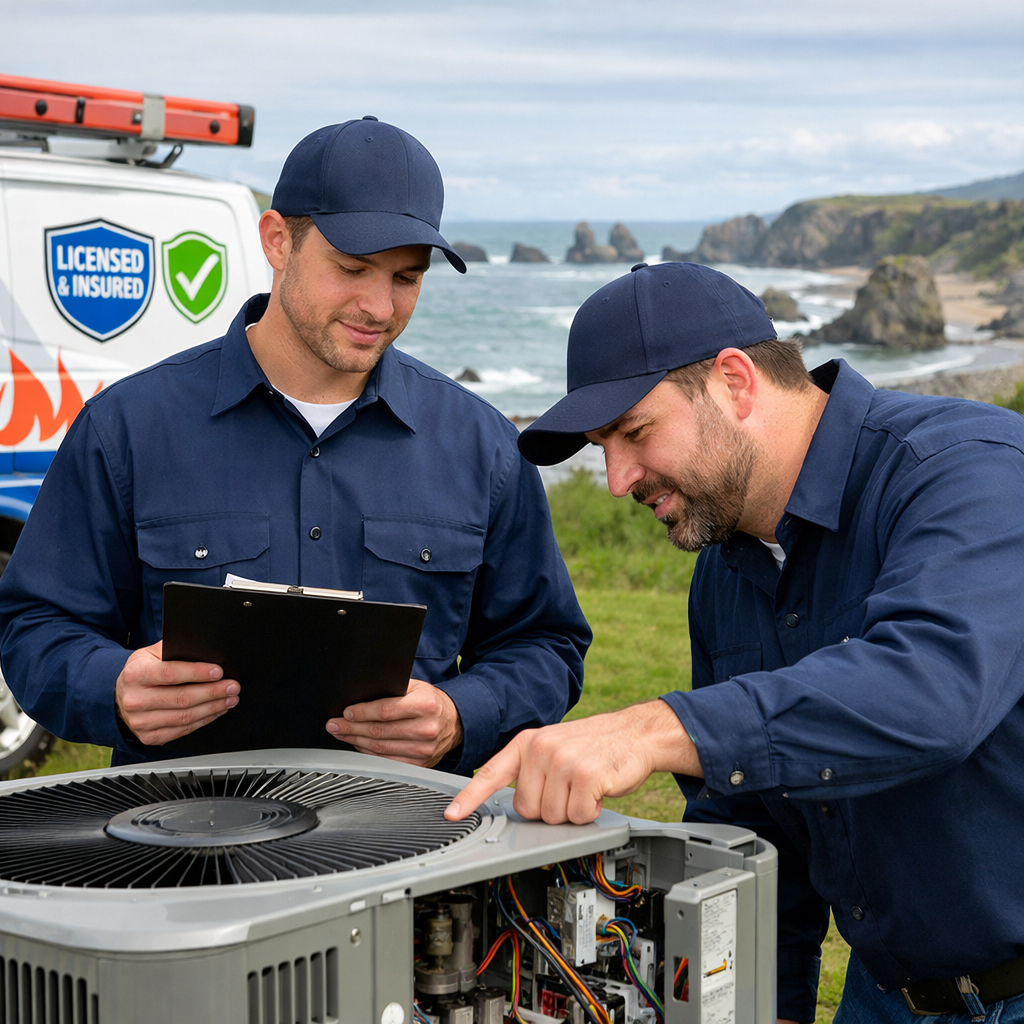
Top-Rated Bandon HVAC Technicians: Licensed, Insured, and Customer-Approved
Finding the best HVAC repair technicians in Bandon isn’t about flashy ads—it’s about verifiable credentials, documented scopes, and proven performance. The top-rated pros in Bandon HVAC repair hold an active Oregon CCB license, carry insurance, maintain current technician certifications, and back every bid with measurements and commissioning. Many local providers also advertise 24/7 emergency HVAC service and aim for same-day or within-24-hours response, which is essential during peak weather. To help you hire confidently, this AC Repair Advisor guide explains the must-have credentials, the scope details that protect comfort and warranties, and the coastal considerations that matter in Bandon’s salty air. Use it to shortlist licensed and insured HVAC contractors who are truly customer-approved—not just well-marketed.
What top rated means in Bandon HVAC
In Bandon, top-rated means verifiable quality—the standard AC Repair Advisor applies. Expect complete service coverage—diagnostics, repairs, component replacement, maintenance, new installs, and 24/7 emergency response—with many advertising same-day or within-24-hours availability per local Bandon HVAC repair service menus (bandon-or.securityinfo.com/services/hvac-repair). Reviews and references matter, but they must be paired with credentials and documentation.
A top-rated HVAC technician is a professional who holds an active Oregon CCB license with current insurance, has NATE and EPA Section 608 certifications, maintains a BBB-listed profile with solid references, offers defined emergency processes, and delivers written scopes that include commissioning and verified measurements.
Industry voices continue to push toward high-efficiency systems; expert commentary urges technicians to master inverter-driven heat pumps and mini-splits to better serve homeowners and reduce bills (shopping.yahoo.com/home-garden/home-improvement/articles/expert-calls-hvac-technicians-noticing-082000593.html).
Must have credentials to verify
These credentials protect eligibility for rebates, support code compliance, and improve first-time-right outcomes. Use the AC Repair Advisor checklist below during your first call.
| Credential | Why it matters | How to verify | Proof received |
|---|---|---|---|
| Oregon CCB license | Confirms legal standing and baseline contractor standards | Check state CCB database; record status and expiration | Yes / No |
| Liability & workers’ comp insurance | Shields you from accidents and property damage | Request certificates naming you as certificate holder | Yes / No |
| NATE certification | Signals tested technical competency | Ask for NATE ID; confirm current status | Yes / No |
| EPA Section 608 | Required for refrigerant handling | View wallet card; note certification type | Yes / No |
| Energy Trust of Oregon Trade Ally | Eases access to rebates and QA pathways | Search the Trade Ally directory | Yes / No |
| BBB listing and reviews | Independent accountability and complaint history | Read listing; note patterns/outcomes | Yes / No |
Oregon CCB license and active insurance
Only hire licensed and insured HVAC contractors. Verify the Oregon CCB license in the state database and request an insurance certificate that lists you as the certificate holder with coverage limits and expiration dates. Add the CCB number and insurer details to the written estimate; do not proceed if any coverage is lapsed. This is the foundation of licensed and insured HVAC work and should be non-negotiable.
NATE and EPA 608 technician certifications
EPA Section 608 certification is a federal credential required for any technician who handles refrigerants. It confirms knowledge of safe recovery, recycling, leak prevention, and recordkeeping to protect the environment and ensure compliant service. Always ask to see the tech’s wallet card and note the certification type.
Customers can rely on NATE-certified technicians for installation, service, and repair—industry groups consistently tie structured training to better outcomes (hvac-blog.acca.org/what-is-howells-heating-airs-secret-to-success-focus-on-the-team-first). Request copies or ID numbers for both NATE and EPA 608 and include them in the work order.
Energy Trust of Oregon Trade Ally participation
Selecting an Energy Trust of Oregon Trade Ally helps align designs and equipment with incentive rules from day one, reducing risk of missed rebates and rework. Confirm Trade Ally status before any design decisions, and require estimates to list incentive-eligible model numbers and the documentation steps the contractor will complete.
BBB listing and independent reviews
Use independent directories to validate reliability. Review BBB listings for complaint patterns and resolution behavior; note dates, responses, and outcomes. Then call at least two recent homeowner references to confirm punctuality, cleanliness, scope accuracy, and post-install support. BBB reviews complement references and bring accountability beyond testimonials.
Scope of work homeowners should require
A measurement-backed scope prevents oversizing, airflow problems, and warranty headaches. AC Repair Advisor recommends requiring the following in every written proposal:
- Manual J load calculation summary with design temperatures
- Equipment selection rationale with model numbers and capacities
- Manual D-informed duct evaluation with leakage and sizing notes
- Static pressure readings (initial) and target performance metrics (CFM, static)
- Commissioning checklist with measurement methods and deliverables
- Maintenance plan details with schedule and filter specs
Mini quote checklist:
- Diagnostic steps and measurement data included
- Model numbers and efficiency tiers
- Performance targets (CFM/ton, total external static pressure)
- Verification steps and commissioning report commitment
Written load calculations and right sizing
Manual J is a residential load calculation method that estimates heating and cooling loads using your home’s specifics—insulation levels, window performance, orientation, and air leakage. It produces room-by-room and whole-home BTU/hr requirements to size equipment correctly, preventing short cycling, humidity issues, and energy waste.
Insist on a load summary that shows design temperatures, calculated BTUs, selected capacities, and safety factors used.
Manual D duct evaluation and static pressure testing
Static pressure is the resistance to airflow in a duct system, measured in inches of water column. It reflects how hard the blower works to move air. Excessive static reduces airflow, increases noise, stresses equipment, and lowers efficiency—so it must be measured, documented, and corrected when needed.
Require documentation of duct condition, sizing, leakage, and balancing per Manual D principles, with before-and-after total external static pressure readings included in commissioning.
Documented commissioning and performance verification
Commissioning should verify:
- Refrigerant charge method and results
- Airflow (CFM/ton) and total external static pressure
- Temperature split (delta-T) and control calibration
- Thermostat setup and equipment staging
Ask for a one-page commissioning report signed by the lead technician, with model/serial numbers and photos of gauges or measurement screens.
Clear maintenance plan and warranty terms
Get a written maintenance calendar covering seasonal tune-ups, filter type and change intervals, coil cleaning, and safety checks. Regular HVAC maintenance helps prevent costly repairs, a point echoed in local service overviews (bandon-or.securityinfo.com/services/hvac-repair). Include labor and equipment warranty durations, registration steps, and exclusions—and note if maintenance compliance is required to keep warranties valid.
Services you should expect from Bandon technicians
Bandon-area offerings typically include diagnostics, repairs, component replacement, preventive maintenance, installations, and 24/7 emergency service, with many aiming for same-day or within-24-hours response (bandon-or.securityinfo.com/services/hvac-repair). Confirm these during your first call to set expectations—AC Repair Advisor recommends clarifying them upfront.
Service checklist to confirm:
- System types supported (central AC, heat pumps, furnaces, ductless)
- Emergency/after-hours process and typical response times
- Diagnostic fees and whether they’re credited toward repair
- Commissioning and documentation deliverables
- Maintenance plan pricing and scope
Repair, replacement, and installation across system types
A well-rounded technician should service and install central AC, heat pumps, furnaces, and ductless mini-splits; professional installation is key to long-term efficiency. Ask for model options at multiple efficiency tiers and a repair-vs-replace analysis that includes lifecycle costs, not just today’s price.
Preventive maintenance and seasonal tune ups
Regular maintenance reduces breakdowns and extends equipment life (bandon-or.securityinfo.com/services/hvac-repair). Organizations using structured maintenance programs report better workflows, reduced backlog, and more proactive prevention—drivers of higher uptime and satisfaction (blog.maintenancecare.com). Request a written tune-up checklist and annual pricing.
Emergency and rapid response capabilities
Many providers advertise 24/7 emergency HVAC service and target rapid or same-day response in Bandon (bandon-or.securityinfo.com/services/hvac-repair). Ask about typical after-hours response times and diagnostic fee policies before you commit.
Coastal considerations for Bandon homes
Salt air, wind, and moisture accelerate corrosion and infiltration along the coast. Choose corrosion-resistant materials, shorten maintenance intervals, and verify airtight ducts in crawlspaces and attics for lasting performance.
Salt air corrosion mitigation and materials
Prioritize coastal-rated coils/finishes, stainless hardware, factory or field-applied protective coatings, and regular fresh-water rinsing of outdoor units.
Quick coil-care checklist:
- Rinse outdoor coil with fresh water monthly in salt-heavy seasons
- Inspect for coating damage or rust quarterly
- Verify drain clearances and debris removal
- Reapply protective coatings per manufacturer guidance
Duct integrity, sealing, and airflow on coastal homes
Coastal moisture and wind-driven infiltration can worsen duct leakage. Require:
- Duct leak testing and UL 181–rated mastic or tape sealing
- Proper insulation R-values for attics/crawlspaces
- Airflow balancing with static pressure targets Tie corrections to Manual D principles and capture commissioning airflow readings to confirm results.
Heat pump and mini split suitability and cold climate options
Modern inverter-driven heat pumps and ductless mini-splits are well-suited to Oregon’s coastal climate and can leverage incentives. Discuss cold-climate ratings, defrost strategies, backup heat, and control settings, and ensure sizing and commissioning are measurement-based.
Energy efficiency and incentives in Oregon
Oregon identifies energy efficiency as a key resource with significant untapped potential, making upgrades that lower consumption a policy priority (oregon.gov/energy/Data-and-Reports/Documents/2022-Biennial-Energy-Report.pdf). Plan your project around incentive eligibility and documentation from the start; AC Repair Advisor stresses locking in requirements early to avoid missed savings.
High efficiency heat pumps, inverters, and smart controls
An inverter heat pump varies compressor speed to match load, delivering steadier temperatures, quieter operation, and higher part-load efficiency. Industry reporting suggests newer efficient setups can help cut energy bills by up to about 50% in favorable scenarios (shopping.yahoo.com/home-garden/home-improvement/articles/expert-calls-hvac-technicians-noticing-082000593.html). Integrate a smart thermostat and verify settings during commissioning.
Aligning projects with Energy Trust incentives
To avoid missed rebates:
- Choose an Energy Trust Trade Ally and qualifying equipment early
- Confirm required forms, photos, and inspection steps
- Include incentive amounts, milestones, and who handles paperwork in the proposal Aligning on documentation up front streamlines approvals and cash-back timing.
Long term operating costs and lifecycle value
Compare total value, not just upfront price. Use a 10-year cost view.
| Option | Install price | Estimated kWh/therms (10 yrs) | Maintenance (10 yrs) | Likely repairs | Incentives/rebates | 10-yr total (est.) |
|---|---|---|---|---|---|---|
| Mid-efficiency heat pump | $ | $ | $ | $ | –$ | $ |
| High-efficiency inverter heat pump | $$ | $ | $ | $ | –$$ | $ |
| Fill with contractor-provided estimates and local rates; Oregon’s efficiency focus favors options with lower operating costs over time (oregon.gov/energy/Data-and-Reports/Documents/2022-Biennial-Energy-Report.pdf). |
How to vet a Bandon HVAC technician step by step
Follow this 5-step, repeatable process from AC Repair Advisor to shortlist the best HVAC repair technicians in Bandon.
- Pre-screen: licenses, insurance, certifications
- Interview: diagnostics, training, emergency response
- Verify scope: measurements, models, commissioning
- Check: references and BBB history
- Compare: total lifecycle value and incentives handled
Pre screen licenses, insurance, and certifications
Collect the Oregon CCB number, proof of active liability and workers’ comp insurance, NATE ID, EPA 608 type, and Energy Trust Trade Ally status. Remove any bidder who cannot provide documentation the same day.
Interview for diagnostics, training, and emergency process
Ask how they perform Manual J, apply Manual D, and measure static pressure; request a sample commissioning report. Confirm ongoing training on inverters, heat pumps, and mini-splits, and verify emergency response practices, including typical within-24-hours targets and after-hours escalation.
Require written estimates with scope and commissioning
Mandate a load calc summary, equipment model numbers, duct evaluation results, initial static pressure readings, a commissioning checklist, incentive steps, and a maintenance plan. Reject vague or template-only quotes.
Check references and BBB history
Call two recent homeowners to confirm punctuality, cleanliness, communication, and post-install performance. Review the BBB listing for complaint patterns and resolutions; note dates and outcomes.
Compare total value, not just lowest bid
Use a comparison table that scores scope completeness, credentials, response time, warranty terms, commissioning proof, lifecycle cost, and incentives handling. Favor bids with full diagnostics and commissioning over marginally cheaper, vague offers.
Red flags and risk reducers
Use this AC Repair Advisor quick-scan table to avoid common pitfalls.
| Red flag | Risk-reducing action |
|---|---|
| No Manual J summary, duct findings, or static pressure data | Insist on a measurement-backed scope; decline offers without it |
| No proof of active CCB license or insurance | Verify independently; remove bidder if not current |
| Pushy equipment upsells before measurements | Require load/duct data and a commissioning plan before any deposit |
| No written tune-up checklist or schedule | Request a maintenance plan; regular maintenance prevents costly repairs, and structured processes improve uptime (bandon-or.securityinfo.com/services/hvac-repair; blog.maintenancecare.com) |
Frequently asked questions
How can I confirm an Oregon CCB license and insurance for an HVAC contractor
Ask for the contractor’s CCB number and insurance certificate, then verify license status in the state database; hire only when both are active and the insurer lists you as the certificate holder. AC Repair Advisor’s credential checklist helps you capture these details.
What proves a technician is qualified to work with refrigerants
EPA Section 608 certification is required—request the technician’s EPA 608 card and confirm the certification type; pairing this with NATE certification is a strong indicator of skill. AC Repair Advisor recommends recording both IDs on the work order.
Why are Manual D and static pressure tests important before replacing equipment
They verify duct sizing and airflow resistance so new equipment can deliver the right CFM quietly and efficiently, avoiding comfort, energy, and longevity issues. AC Repair Advisor advises requiring documented readings in the proposal.
Do I need to hire an Energy Trust Trade Ally to get rebates
Working with a Trade Ally helps ensure your equipment and paperwork meet incentive rules; AC Repair Advisor sees it as the most reliable path to qualify and avoid missed rebates.
What response times are reasonable for emergency HVAC service in Bandon
Many providers advertise 24/7 emergency service and aim for same-day or within-24-hours response; AC Repair Advisor suggests confirming typical after-hours times before you hire.