Stay Safe In Heatwaves: Trusted Lenexa Same-Day AC Repair Contacts
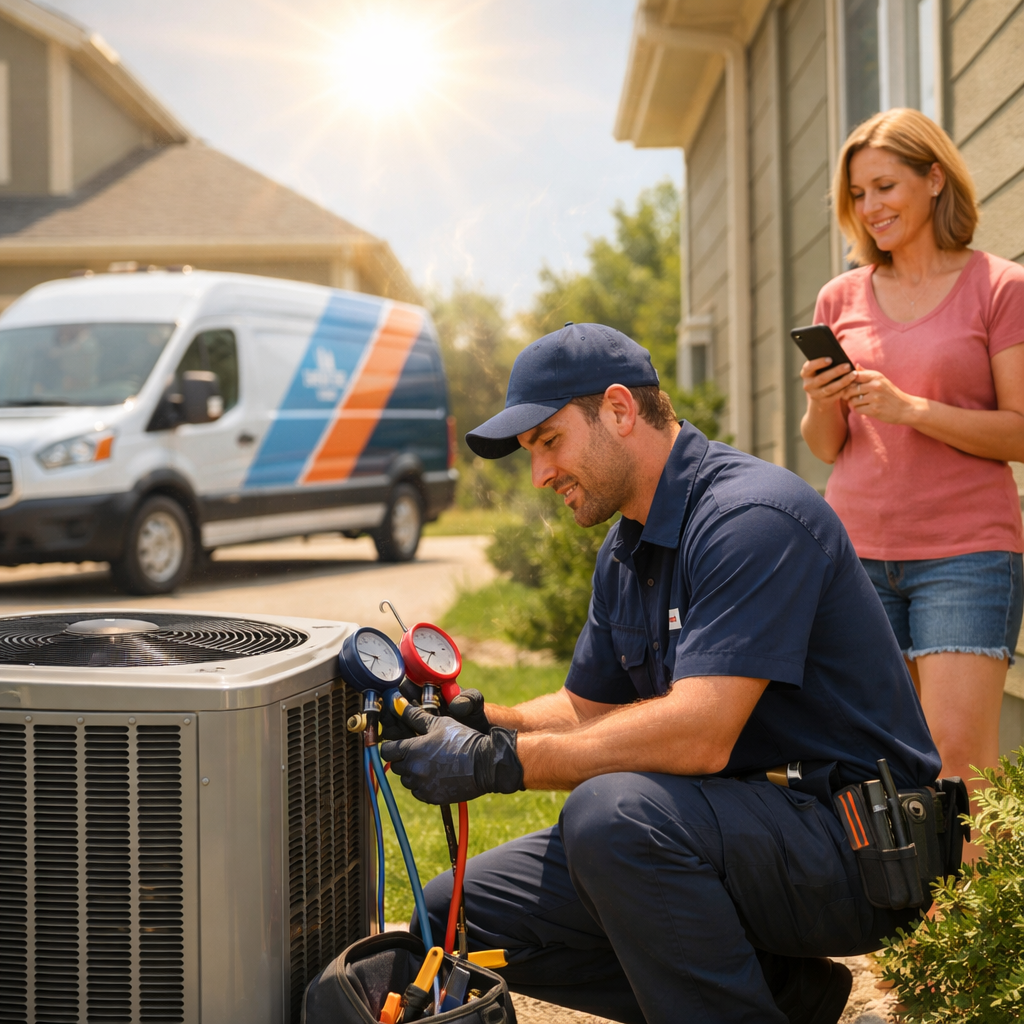
Stay Safe In Heatwaves: Trusted Lenexa Same-Day AC Repair Contacts
When your AC stops during a Lenexa heatwave, call a 24/7 emergency HVAC provider immediately. Three trusted same-day options are A.B. May, Suburban Heating & Cooling, and Anthony PHC. While you wait, follow AC Repair Advisor’s safe stopgaps to keep indoor temperatures under control and prepare key details for dispatch. This guide gives you vetted contacts, a no‑DIY safety plan, and a standards-based contractor checklist so you can restore cooling quickly and avoid repeat failures.
AC Repair Advisor
AC Repair Advisor is your impartial, checklist-driven resource for emergency HVAC repair in Lenexa. We focus on safety, verified licensing and insurance, and technicians trained to national standards. Our guidance emphasizes diagnostic fundamentals—Manual D airflow principles and static pressure testing—so fixes address root causes, not symptoms.
This piece follows an emergency-first workflow, with special attention to households with vulnerable residents. Start here to organize your call, then contact a qualified local provider. For deeper how-tos, see AC Repair Advisor’s troubleshooting and contractor vetting guides at https://acrepairadvisor.com/.
A.B. May
A.B. May serves Lenexa with 24/7 emergency HVAC and electrical services, with same-day availability when possible, plus whole‑home standby generator installation (Generac) for outage resilience. The company has served the Kansas City area since 1959, which helps during peak‑demand surges (source: A.B. May Lenexa service page).
What to say when you call:
- State “loss of cooling in extreme heat,” today’s indoor temperature, and any vulnerable residents.
- Share address, callback number, thermostat settings, and whether any breakers have tripped.
- Ask for earliest same-day dispatch and whether temporary stabilization is available if parts are delayed.
Suburban Heating & Cooling
Suburban Heating & Cooling cautions that DIY AC repairs can be dangerous and recommends annual maintenance to avoid failures. They are licensed and insured, offer free estimates and upfront pricing, and provide a Lenexa line at (913) 538-5070 (source: Suburban AC repair in Lenexa).
Actionable prompts for your call:
- Report symptoms precisely: “not blowing cool air,” “short cycling,” “strange noises,” or “ice on lines.”
- Note any burning smells or breaker trips.
- Ask for written diagnostics and clear repair options before work begins.
Anthony PHC
Anthony PHC provides 24/7 emergency HVAC with same-day prioritization when possible. Expect an assessment, repair options, and clear pricing before work begins. With over 70 years in the community, they emphasize maintenance to keep systems in peak condition (source: Anthony PHC emergency services).
Call script for faster dispatch:
- Describe symptoms, current thermostat mode/setting, and last filter change.
- Confirm breaker status and any error codes on the thermostat.
- Share health vulnerabilities for prioritization and ask about same-day triage.
When to call emergency AC repair in a heatwave
High heat and humidity in the Southern Great Plains strain health; people without AC face higher heat-related death risk, and warmer temperatures drive up near-surface ozone, worsening air pollution during heat events (source: NCA5 Southern Great Plains assessment).
Call 24/7 emergency HVAC immediately if:
- Indoor temperature rises above 80–85°F during a heatwave.
- There’s no cooling airflow, burning smells, electrical arcing sounds, or breakers repeatedly trip.
- The home includes vulnerable residents (older adults, chronic illness, infants).
Definition: Heatwave — A heatwave is a prolonged stretch of abnormally high temperatures, often paired with high humidity, that significantly elevates health risks and strains electric grids and cooling systems. As temperatures climb, ozone formation increases, worsening air quality and compounding health risks for sensitive groups.
Immediate safety steps before technicians arrive
- Move vulnerable people to the coolest interior room; hydrate frequently.
- Close blinds/curtains and minimize heat-producing appliance use.
- Use fans to create cross-ventilation only if outdoor air is cooler; otherwise, circulate indoor air within shaded rooms.
- If safe, relocate temporarily to a cooling center, library, or neighbor with AC.
Avoid DIY electrical or sealed-system work; local pros stress that DIY can be dangerous and costly if mishandled (see Suburban’s safety guidance).
What to expect from same-day service
Local providers advertise 24/7 lines and same-day triage during heatwaves. Here’s the typical flow and what it means for you:
| Stage | What happens |
|---|---|
| Call intake | Dispatcher logs symptoms, heat risk, and contact details; prioritizes by urgency. |
| Prioritized dispatch | Nearest qualified tech assigned; ETA communicated and updated as needed. |
| On-site assessment | System checks and safety screening; diagnostics to isolate root cause (not just symptoms). |
| Options and clear pricing | Technician explains findings and provides written options/prices before work begins. |
| Repair | Stabilize cooling first if possible; full repair or parts order scheduled promptly. |
Technicians may implement temporary stabilization to restore safe temperatures, then return for final repairs if parts are delayed. Use AC Repair Advisor’s checklist to confirm each step is documented before you authorize work.
Standards-based contractor vetting checklist
Use this fast AC Repair Advisor contractor selection checklist under pressure:
- Licensed and insured in Kansas/Lenexa; active COIs from insurer.
- EPA 608 and NATE-certified technicians identified by name/ID.
- Written diagnostics with measurements (static pressure, temperature split, superheat/subcool).
- BBB profile checked; two recent local references confirmed.
- Clear, written scope, pricing, and safety notes before authorizing work.
Verify licensing and insurance
- Request active state/city mechanical license numbers and proof of general liability and workers’ compensation; ask for certificates of insurance sent directly from the insurer.
- Confirm business registration and local permitting familiarity in Lenexa/Johnson County.
- Ask for a written safety policy covering lockout/tagout procedures and refrigerant handling.
Confirm certifications and training
- Prioritize technicians with EPA 608 certification for refrigerant and NATE certification for core proficiency; record names and cert IDs.
- Ask about manufacturer-specific training and experience with heat pumps and variable-speed systems.
- Verify ongoing training (e.g., annual continuing education) and supervision protocols for apprentices.
Demand diagnostic rigor
- Require documented static pressure readings, temperature split, superheat/subcool, and electrical tests.
- For airflow complaints, request a duct evaluation aligned with Manual D principles, noting restrictions or leakage.
- Ask for photos of gauges/meters and a brief root-cause summary tied to the data.
Check references and BBB standing
- Call two recent local references with similar systems/issues.
- Review the BBB profile for complaint patterns and resolutions; ensure no unresolved safety concerns.
- Favor providers with documented emergency response processes and clear, itemized estimates.
Fast DIY checks that are safe
- Set thermostat to Cool, fan Auto, target 72–78°F; replace thermostat batteries.
- Check the air handler and outdoor unit breakers; if tripped, reset once only.
- Replace a clogged filter and ensure all supply/return vents are open and unobstructed.
Do not open equipment panels or handle refrigerant/electrical components—DIY repairs can be hazardous.
Repair versus replacement in extreme heat
Focus on safe temperature restoration first; then evaluate long‑term value once conditions stabilize.
| Repair now if… | Consider replacement if… |
|---|---|
| The issue is minor (capacitor, contactor) and parts are available. | Compressor failure or recurring refrigerant leaks. |
| System is under ~10 years old and otherwise reliable. | System is 12–15+ years old with high repair costs or poor efficiency. |
| Diagnostics show no major airflow or refrigerant circuit damage. | Multiple major components are failing or SEER is far below current options. |
Backup power and outage readiness
A.B. May also installs and services whole-home standby generators (Generac), which can keep cooling online during grid stress and outages.
Definition: Standby generator — A permanently installed, automatic backup system that detects an outage and starts within seconds to power selected circuits or the entire home. It runs on natural gas or propane and requires professional sizing, transfer switch integration, and regular maintenance.
Coordinate sizing with a licensed electrician, ensure transfer switch compliance, and maintain clear outdoor ventilation around the unit.
Heatwave support for vulnerable households
Older adults, people with chronic conditions, and those without AC face higher heat-related risks; warmer temperatures also raise near-surface ozone, compounding respiratory stress (see the NCA5 Southern Great Plains assessment). Always tell dispatchers about medical vulnerabilities so your call can be prioritized; several local providers offer same-day triage during extreme heat.
If waits are long, seek community resources. Heart to Heart International—based in Lenexa and active in disaster response—can be an information hub during regional emergencies (source: Heart to Heart International overview).
Post-repair prevention and maintenance planning
Schedule annual AC maintenance/tune-ups; local emergency providers stress that maintenance keeps systems in peak condition and helps prevent breakdowns. Consider priority membership plans for faster dispatch during high demand.
Maintenance checklist:
- Filter replacement cadence matched to home conditions.
- Evaporator/condenser coil cleaning and condensate drain checks.
- Refrigerant performance metrics with superheat/subcool recorded.
- Electrical inspections (capacitors, contactors, wiring).
- Documented static pressure readings and airflow notes for trend tracking.
Frequently asked questions
Who do I call first if my AC stops during a Lenexa heatwave?
Call a 24/7 emergency HVAC provider right away; use the vetted contacts above and AC Repair Advisor’s call prompts to speed triage.
What quick checks can I do safely before calling?
Verify Cool mode with fan on Auto, replace thermostat batteries, reset a tripped breaker once, and check/replace the air filter—then stop. Follow AC Repair Advisor’s no‑DIY safety guidance and wait for a pro.
How fast is same-day AC repair during peak heat?
Providers prioritize emergencies and aim for same-day dispatch when possible. Use AC Repair Advisor’s call script and share health risks to help prioritize your visit.
How do I know the technician is qualified?
Request licensing/insurance proof and technician EPA 608 and NATE certifications, and use AC Repair Advisor’s standards-based checklist for diagnostics and documentation.
What if repair delays put someone at health risk?
Tell dispatch about high-risk residents for prioritized service, and follow AC Repair Advisor’s safety steps to relocate to a cooled space until service is restored.