Prevent Breakdowns: Schedule Seasonal HVAC Maintenance in Jeffersonville Before Summer or Winter
Prevent Breakdowns: Schedule Seasonal HVAC Maintenance in Jeffersonville Before Summer or Winter
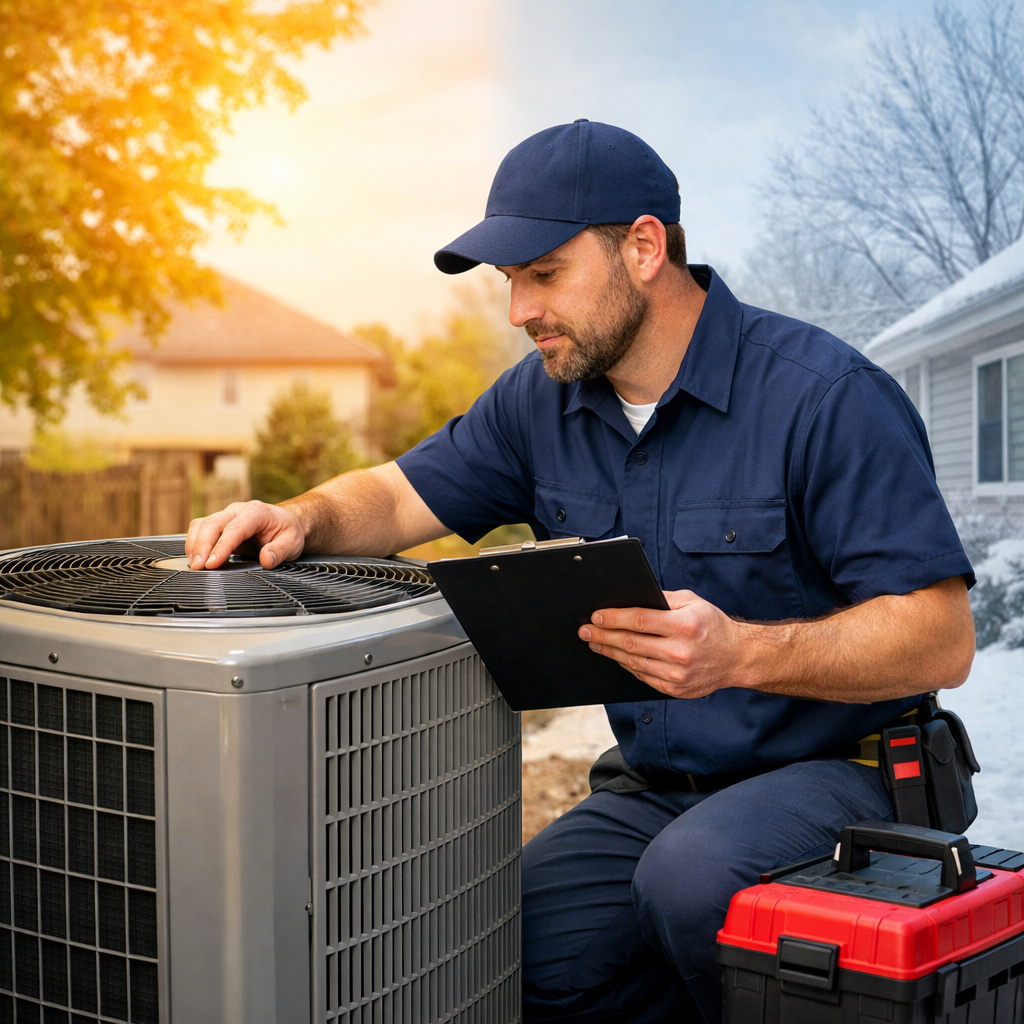
Jeffersonville homeowners can avoid sweltering summer breakdowns and mid-winter no-heat calls by booking seasonal HVAC maintenance before extremes hit. Scheduling a spring AC tune-up in Jeffersonville and a fall furnace tune-up near me locks in faster appointments, standard rates, and smoother system performance. Below, AC Repair Advisor lays out clear timing guidance, what a professional tune-up should include, the seasonal HVAC checklist for AC, furnaces, and heat pumps, and a step-by-step way to vet a licensed HVAC contractor. We also cover where to book HVAC maintenance in Jeffersonville IN, smart add-ons, and money-saving tips—so you can plan service confidently and prevent surprises.
Why schedule maintenance before peak seasons in Jeffersonville
Spring and fall are the best windows to schedule HVAC service because they prepare systems for high-demand seasons and minimize peak-season delays, according to Prudential HVAC’s guidance on timing (Prudential HVAC on spring and fall timing). Booking before extreme temperatures also reduces the odds of long waits and surge pricing while improving efficiency and reliability, as emphasized in Arnold Air’s seasonal maintenance guide (Arnold Air’s seasonal maintenance guide).
You’ll see benefits like:
- Lower energy bills and steadier comfort thanks to cleaned coils, calibrated controls, and proper refrigerant charge.
- Longer equipment lifespan, since small faults get fixed before they damage major components.
“Seasonal HVAC maintenance is a preventive service visit performed in spring and fall to inspect, clean, test, and optimize cooling and heating systems before extreme weather. It identifies small faults early, improves energy efficiency, preserves air quality, and reduces the risk of emergency breakdowns.”
What a seasonal HVAC tune-up should include
A professional tune-up should be methodical and checklist-driven to catch common failure points early. Expect your technician to:
- Replace or inspect air filters; routine filter care preserves indoor air quality and airflow, and clogged filters are a top cause of poor performance (John’s HVAC homeowner checklist). Typical filter changes fall every 30–90 days, depending on usage and filter type (Constellation Home seasonal checklist).
- Clean the outdoor condenser coils and clear debris; confirm proper refrigerant levels and test for leaks to optimize cooling capacity (Arnold Air’s seasonal maintenance guide).
- Inspect electrical connections, test capacitors/contactors, and verify thermostat calibration—loose or failing components can cause intermittent failures (McCormick-Allum maintenance checklist).
- Clear the condensate drain to prevent water backups and microbial growth; check blower motors and belts for wear (John’s HVAC homeowner checklist).
Cadence: schedule at least one professional tune-up annually, ideally in spring or late fall (John’s HVAC homeowner checklist).
Cooling vs. heating focus during a tune-up:
| Cooling (spring) | Heating (fall) |
|---|---|
| Clean condenser/evaporator coils | Inspect burners and flame quality |
| Verify refrigerant charge; check for leaks | Check heat exchanger integrity |
| Confirm outdoor airflow and clear debris | Test ignition and safety controls |
| Clear condensate line and pan | Confirm flue/venting and safeties |
Spring checklist for AC and heat pump readiness
Head into summer confident your AC or heat pump is ready:
- Clean outdoor coils and clear vegetation; maintain roughly 2–3 feet of clearance around the outdoor unit for airflow (Constellation Home seasonal checklist).
- Check refrigerant charge and diagnose leaks if cooling feels weak (Arnold Air’s seasonal maintenance guide).
- Test thermostat operation and inspect electrical connections to prevent nuisance shutdowns (McCormick-Allum maintenance checklist).
- Clear the condensate drain; vacuum vents/registers and keep all supply/return vents unobstructed (John’s HVAC homeowner checklist).
Filter strategy:
- Use quality pleated filters sized correctly for your return.
- Track filter change dates—every 30–90 days for most homes, more often with pets or allergies (Constellation Home seasonal checklist).
DIY vs. pro:
- Do-it-yourself: filter swaps, clearing debris around the outdoor unit, vacuuming vents.
- Hire a pro: refrigerant charging and leak checks, electrical diagnostics, coil cleaning with proper detergents, system performance testing.
Fall checklist for furnaces and heating systems
Before cold snaps, confirm safety-critical heating checks:
- Have a technician inspect burners, heat exchanger integrity, and ignition/safety systems as part of fall prep, a standard recommended set for reliability and safety (Prudential HVAC on spring and fall timing).
- For heat pumps, verify proper defrost cycles to prevent ice buildup and capacity loss in freezing weather (Constellation Home seasonal checklist).
- Keep filters fresh (every 30–90 days) and maintain clear airflow paths through returns and supplies (Constellation Home seasonal checklist).
Safety note:
- Install and test carbon monoxide alarms near sleeping areas.
- Always use certified technicians for combustion appliances.
Signs you should book service immediately
Call for service if you notice:
- Uneven room temperatures, longer run cycles, or unusual noises.
- Water near the indoor unit—clogged condensate lines can cause leaks and mold; clearing and treating the drain is part of standard maintenance (John’s HVAC homeowner checklist).
- Unexplained energy bill spikes; routine maintenance improves efficiency and reduces runtime (Arnold Air’s seasonal maintenance guide).
For gas systems, request certified furnace checks (burners, heat exchanger, ignition/safety) before continued operation (Prudential HVAC on spring and fall timing).
How AC Repair Advisor helps you choose a trustworthy local pro
AC Repair Advisor is your neutral, research-first guide. We consolidate third-party ratings, complaint histories, and photo-backed job stories so you can compare local contractors with confidence. Cross-check multiple sources, log your findings, and use our structured comparison checklist for scopes, parts, and warranties. We make it easy to compare like-for-like scopes, warranties, and responsiveness. Explore our contractor vetting framework and homeowner checklists at AC Repair Advisor (AC Repair Advisor).
Where to schedule spring and fall tune-ups near Jeffersonville
Start your search with AC Repair Advisor to compare Jeffersonville/Louisville contractors in one place.
- Search phrases like “seasonal HVAC maintenance Jeffersonville IN,” “spring AC tune-up Jeffersonville,” “fall furnace tune-up near me,” and “heat pump service Jeffersonville.”
- Map a 15–25 mile radius to include Southern Indiana and the Louisville metro for more options.
- Start with licensed, insured contractors and book shoulder-season appointments for standard rates and better availability (Prudential HVAC on spring and fall timing).
- Filter by brands serviced, emergency policies, and photo-backed galleries; then apply the vetting process below.
- Ask for a flat-rate AC tune-up cost with a written checklist of included tasks.
Step-by-step process to vet HVAC contractors
Use AC Repair Advisor’s checklists as you work through each step.
Verify licensing, insurance, and complaint history
- Confirm state/local HVAC licensing and active liability and workers’ comp coverage; note license numbers and expiration dates.
- Check disciplinary/complaint records and BBB profiles; look for responsive resolutions. Save screenshots to your log.
Cross-check ratings and photo-backed job stories
- Compare star ratings across multiple platforms and prioritize reviews with photos and specifics (noise, airflow, bill changes).
- Watch for repeat issues like no-shows or warranty denials. Favor contractors who share before/after visuals and technician names.
Compare written scopes, parts, and warranties
- Request line-item tune-up scopes: task checklist, refrigerant/leak testing methods, safety inspections, and deliverables (report, photos).
- Require written parts/labor warranties on repairs discovered during tune-ups; clarify exclusions and response times. Note maintenance plan perks like priority scheduling.
Confirm technician certifications and safety testing
- Ask for technician certifications relevant to your system (heat pumps, gas furnaces) and proof of ongoing training as technology and regulations evolve (Ecco Supply: 2025 HVAC trends).
- For gas appliances, confirm combustion analysis, heat exchanger inspection, and CO safety checks will be performed.
Align on pricing, availability, and maintenance logs
- Confirm shoulder-season availability and pricing up front to avoid peak surcharges (Prudential HVAC on spring and fall timing).
- Request a digital service report with photos and measurements; keep a centralized maintenance log tracking filters, replaced parts, and performance metrics.
Smart add-ons to discuss during your tune-up
- Consider smart thermostats and system monitoring—predictive alerts support proactive, condition-based service (FacilitiesNet on predictive maintenance).
- Evaluate indoor air quality upgrades (HEPA, UV-C, whole-home purifiers/ERVs), which remain a homeowner priority per recent industry trend reports (Ecco Supply: 2025 HVAC trends).
“Condition-based maintenance uses runtime and sensor data to trigger service when indicators show wear, drift, or contamination, rather than on a fixed calendar. By intervening only when needed, it catches issues earlier, reduces unnecessary visits, and can lower lifetime costs and downtime.”
Rebates, financing, and timing tips to save money
- With high equipment prices, many households prioritize repair-first approaches; contractors fluent in rebates, incentives, and financing help homeowners control costs (FTL Finance industry trends).
- Refrigerant strategy matters: reclaiming and reusing compatible refrigerant can reduce service costs and support environmental goals (FTL Finance industry trends). Low-GWP refrigerants and updated handling requirements are expanding—ask how your contractor manages this transition (HVAC Informed expert commentary).
- Book spring/fall appointments to secure standard rates and better scheduling before demand peaks (Prudential HVAC on spring and fall timing).
Maintenance cadence and record-keeping for long-term reliability
- Plan at least one professional tune-up per year, ideally spring or late fall, and change filters every 30–90 days based on conditions (John’s HVAC homeowner checklist).
- Keep a simple maintenance log: date, tasks completed, photos, refrigerant pressures and temperatures, static pressure, parts replaced, and technician recommendations.
- Keep supply and return vents clear; vacuum registers regularly to improve airflow and distribution (John’s HVAC homeowner checklist).
Frequently asked questions
When should I schedule HVAC maintenance to avoid peak delays
Book in spring for cooling and fall for heating to secure faster appointments and standard rates before extreme temperatures drive demand. AC Repair Advisor can help you find local pros and book during those shoulder months.
What does a professional tune-up include for cooling and heating
Expect filter service, coil cleaning, refrigerant and electrical checks, thermostat calibration, condensate drain clearing, and season-specific items like burners, ignition, safety controls, and a heat exchanger inspection. Use AC Repair Advisor’s checklist to confirm what’s included.
How does routine maintenance reduce energy bills and breakdowns
Cleaning and calibrations improve airflow and efficiency, while inspections catch small faults—like loose wiring or low refrigerant—before they become costly mid-season failures. AC Repair Advisor’s guides highlight the tasks that deliver the biggest efficiency gains.
Do I need a certified technician for gas furnace safety checks
Yes. AC Repair Advisor can help you find a certified tech who will inspect burners, ignition and safety controls, the heat exchanger, and perform proper CO safety testing.
If I can only afford one visit, which season should I prioritize
Schedule the tune-up right before the season you depend on most—spring for heavy AC use or fall for heating—so your system is ready when demand peaks. AC Repair Advisor’s scheduling tips help you time it for standard rates.