Plumbers vs. HVAC: Who Should Install Your Kansas City Tankless System?
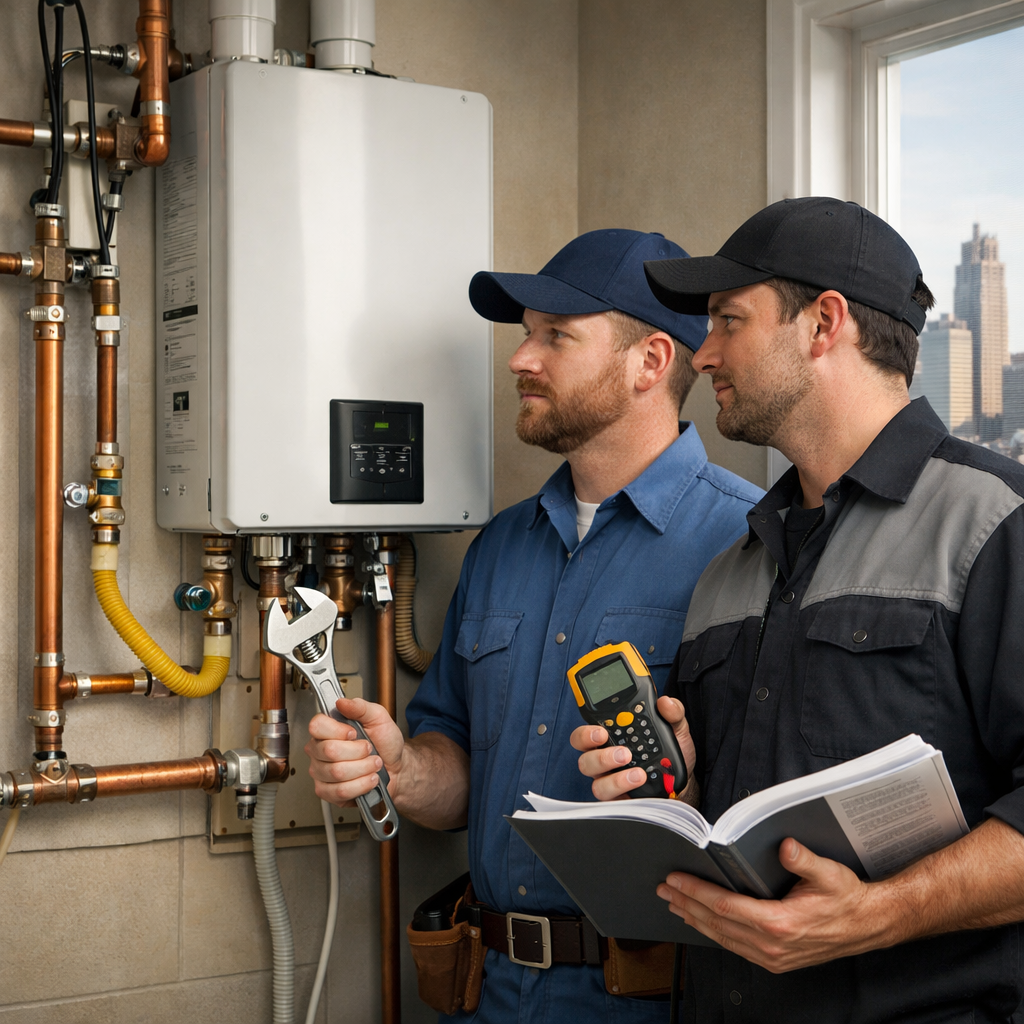
Plumbers vs. HVAC: Who Should Install Your Kansas City Tankless System?
Kansas City homeowners often ask a simple question with a nuanced answer: who installs tankless water heaters in Kansas City? In short, both licensed plumbers and HVAC technicians do—your best choice depends on the project’s scope. Plumbing-heavy retrofits typically fit a licensed plumber; high-efficiency venting, combustion safety, electrical integration, and commissioning call for an HVAC pro. For cross-trade projects, a coordinated team is best. This guide from AC Repair Advisor lays out a practical, step-by-step framework—permits, code compliance, manufacturer certification, and documented commissioning—so you can pick the right Kansas City tankless installer, compare apples-to-apples bids, and protect safety, performance, and warranties.
What Kansas City homeowners need from a tankless installer
A tankless water heater should deliver steady hot water, safe operation, and reliable efficiency. That only happens when the installer owns the full scope—sizing through startup—and proves it with documentation. “A tankless water heater installer is a licensed professional who sizes, mounts, connects, vents, wires, tests, and commissions a gas or electric on-demand unit to meet code, warranty, and performance requirements for a specific home.”
Every Kansas City tankless installer you consider—licensed plumber or HVAC technician—should provide:
- Proper sizing for peak demand and temperature rise, including water quality considerations
- Permit pulling and inspection coordination for plumbing, gas, venting, and electrical
- Manufacturer-certified installation for your model to protect warranties
- Gas leak testing and combustion safety verification for gas tankless units
- Electrical compliance for dedicated circuits, bonding/grounding, and controls on electric tankless
- Final commissioning documents with recorded readings and owner orientation
AC Repair Advisor’s process-focused approach keeps your tankless water heater installation Kansas City–ready: verify credentials, demand commissioning, and require code compliance and permits from the start.
How we compare plumbers vs HVAC for tankless installs
To choose fast and with less risk, match the scope to the trade:
- Scope: plumbing/water/gas, electrical, venting/combustion, condensate, controls
- Licensing: correct local plumbing/gas/electrical credentials
- Manufacturer certification: model-specific training
- Controls integration: recirculation timers, smart controls, or system tie-ins
- Warranty requirements: startup forms and recorded readings
- Permits/inspections: who pulls, schedules, and attends
“Commissioning is the documented process of verifying a new system performs as designed. For tankless, it includes gas pressure checks, combustion tests, flow/temperature calibration, condensate routing, electrical verification, and owner orientation, with recorded readings and startup forms kept for warranty.”
Strengths at a glance:
- Plumbers: water piping, gas-line work, fixture tie-ins, and plumbing/gas code
- HVAC technicians: venting and combustion safety, electrical interfaces and controls, condensate management, and system commissioning
Cost context: HVAC contractors commonly bill $100–$250 per hour, and most companies charge a diagnostic/service fee, especially for troubleshooting and commissioning-intensive scopes, according to Housecall Pro’s pricing guidance (see Housecall Pro’s overview of how to price HVAC services). AC Repair Advisor uses this same criteria to vet Kansas City installers, helping homeowners compare bids on equal footing.
When a licensed plumber is the right choice
Choose a licensed plumber when the job is plumbing-heavy:
- Replacing a tank with a gas or electric tankless in the same location
- Complex water reroutes, isolation valves with flush ports, and scale filtration
- New gas-line sizing or meter connections in compliance with plumbing/gas code
Pros: plumbers excel at water flow/pressure, gas connections, and code-compliant piping. Potential cons: fewer may have deep experience with condensing venting, advanced controls, or formal commissioning unless cross-trained. AC Repair Advisor flags these gaps early and requires documented commissioning regardless of which trade leads.
What to verify:
- Holds the correct local plumbing license and will pull permits
- Manufacturer-certified for your tankless model (proof required)
- Provides commissioning/startup documents to safeguard warranty coverage
When an HVAC technician is the right choice
Pick an HVAC technician when combustion, venting, and controls are central:
- High-efficiency condensing units needing Category III/IV venting, combustion analysis, or condensate routing with neutralizers
- Electrical controls, whole-home integration, recirculation timers, or hydronic/air-handler tie-ins
Pricing expectations: technicians often bill $75–$150 per hour and may apply a service call/diagnostic fee. Typical repair prices run about $150–$450; major repairs can reach $900–$2,500; and full residential HVAC replacements often range $5,000–$12,500—context that explains flat-rate vs hourly line items you may see on quotes (pricing practices summarized by Housecall Pro). AC Repair Advisor prioritizes techs who provide combustion analysis printouts and control setups at handoff.
When you need a coordinated plumber and HVAC team
Some projects require both trades:
- Gas reroutes and meter upsizing
- Long vent runs and exterior penetrations
- Panel or electrical upgrades
- Recirculation loop retrofits
- Integration with thermostats or home automation
Appoint a single lead contractor—plumber or HVAC—to:
- Pull permits and schedule/attend inspections
- Manage manufacturer paperwork and registrations
- Own commissioning sign-off and deliverables
Ask for quotes that clearly break out plumbing, venting, electrical, and commissioning tasks and costs. This minimizes scope gaps and surprise change orders.
Safety, code, and warranty requirements to verify
“Combustion safety testing measures flue gases, draft, and carbon monoxide to ensure proper burn and venting under different operating conditions.”
Before hiring, verify:
- Proper licensing and insurance for plumbing, gas, and electrical in your jurisdiction; model-specific manufacturer certification
- A written plan for gas leak testing, combustion analysis, and electrical code compliance
- Who pulls permits and attends inspections; confirmation that as-builts and startup sheets will be provided
Hiring licensed HVAC pros and following documented startup procedures helps preserve equipment warranties and safety compliance, as emphasized in Angi’s national HVAC repair guidance. AC Repair Advisor treats combustion safety testing and startup documentation as non-negotiable for warranty and safety.
Pricing, fees, and how bids are structured
Common pricing elements in Kansas City tankless quotes:
- Service/diagnostic fee
- Labor rate (hourly or flat-rate task bundles)
- Flat-rate bundles: base install, vent kit, gas-line run
- Parts/materials and accessories
- Commissioning/startup and owner training
- Permit fees and inspection coordination
- Haul-away/disposal of old equipment
National benchmarks to frame expectations:
- HVAC contractors commonly charge $100–$250 per hour; average HVAC repair cost is about $350 (typical range $130–$2,000), per HomeAdvisor’s HVAC repair cost guide.
- Most HVAC companies charge a service/diagnostic fee, consistent with industry pricing playbooks from Housecall Pro.
- HVAC maintenance averages around $250 annually (typical range $175–$350), according to HomeAdvisor’s AC service and maintenance guide.
For predictability, ask for flat-rate or hybrid quotes and compare with a simple table:
| Base install | Gas work | Venting | Electrical | Condensate | Commissioning | Permits | Warranty paperwork | Total |
|---|---|---|---|---|---|---|---|---|
| $ | $ | $ | $ | $ | $ | $ | Included/Not | $ |
| AC Repair Advisor recommends listing commissioning and permit handling as explicit line items for clarity. |
What should be included in a proper tankless installation scope
Use this copy/paste scope to reduce omissions and change orders:
- Confirm model selection, fuel type (gas/electric), and documented sizing for temperature rise and peak flow.
- Pull required permits and provide permit card copy before start.
- Provide manufacturer-certified installer for the selected model (proof on file).
- Mount unit per manufacturer instructions; verify clearances and support.
- Install cold/hot water piping with isolation valves and flush ports; label valves.
- Verify water pressure/flow; document readings pre- and post-install.
- Size and install gas line; add shutoff and sediment trap; pressure test and record static/dynamic readings.
- For condensing units, install condensate trap, neutralizer, and code-compliant drain to approved receptor.
- Install vent system per category and listing; verify slope, supports, sealed penetrations, and termination clearances.
- Provide dedicated electrical circuit, proper overcurrent protection, GFCI/AFCI if required; confirm bonding/grounding.
- Configure controls/recirculation timers; integrate with existing systems if included.
- Perform combustion analysis and document O2/CO2, CO ppm, draft, and flue temperature; correct issues.
- Calibrate outlet temperature and confirm temperature rise at specified flow.
- Complete commissioning: record gas pressures, water temp/flow, error code checks, and control settings.
- Provide owner orientation, manuals, maintenance schedule, and water quality guidance.
- Submit as-builts, labeled photos, warranty registrations, and signed startup/commissioning sheets.
- Attend inspections and close punch list items within agreed timeline.
Included/Excluded clarity:
| Item | Included | Excluded/Notes |
|---|---|---|
| Drywall/finish repairs | ||
| Exterior penetrations/patching | ||
| Electrical panel upgrades | ||
| Recirculation loop install | ||
| Thermostat/home automation tie-in |
Gas, water, and condensate details
- Verify gas-line sizing; install shutoff and sediment trap; pressure/leak test and record static/dynamic pressures.
- Add isolation valves with flush ports; confirm water pressure/flow and thermal expansion control as needed.
- For condensing units: install condensate trap and neutralizer sized to output; run to an approved drain with air gap where required.
- Provide photos plus recorded gas pressures and water temperature/flow at commissioning.
Venting, clearances, and combustion safety tests
- Use vent material/type per Category and manufacturer listing; ensure proper slope, supports, and sealed penetrations.
- Meet termination clearances and provide adequate combustion air per code and manual.
- “Clearances are the minimum safe distances between the appliance/vent and combustible materials to prevent overheating and fire.”
- Perform combustion analysis and document O2/CO2, CO ppm, draft, and flue temperature; correct any issues before handoff.
Electrical, controls, and commissioning steps
- Provide a dedicated circuit as specified; install GFCI/AFCI where required; verify bonding and grounding.
- Set up thermostat/timer/recirculation controls; train the homeowner on use.
- Commissioning must include power verification, error code checks, temperature rise calibration, recirc scheduling, and documentation of all readings.
- Note: documented commissioning is a prerequisite for many warranties; capture signatures and serials on startup sheets.
Permits, inspections, and documentation
- Name the party responsible for permits, attending rough/final inspections, and closing punch-list items.
- Deliver on day one: permit card copy, inspection sign-offs, labeled shutoffs, maintenance schedule, and water quality guidance.
- Provide as-builts, manuals, warranty registrations, and commissioning reports at closeout.
How to choose: a step-by-step contractor selection process
- Define your goals and constraints
- Peak simultaneous hot-water demand, temperature setpoints, recirculation needs
- Available gas/electric capacity, vent paths, water hardness
- Site constraints: tight clearances, exterior vent limits, panel space; fuel preference (natural gas, propane, electric)
- Build a Kansas City shortlist and verify licensing/insurance
- Shortlist 3–5 providers specializing in tankless; confirm active licenses, general liability, and workers’ comp
- Confirm experience with your brand/model and local code jurisdiction; request proof of manufacturer training
- Require credentials, model certifications, and references
- Ask for recent local references with photos, manufacturer certificates for your model, and examples of passed inspections
- Request sample commissioning/startup sheets you’ll receive
- Demand written scopes with commissioning and code items
- Line-item plumbing, gas, venting, electrical, condensate, permits, and commissioning with measurable deliverables
- Specify who pulls permits, conducts combustion analysis, provides owner training, and submits warranty registrations
- Compare at least three bids side by side
- Normalize inclusions, labor warranty length, manufacturer certification, commissioning readings provided, and total price
- Expect a service/diagnostic fee and hourly rates in the $75–$150+ range or flat-rate bundles; maintenance add-ons may run about $250 annually
Define goals, site constraints, and fuel type
- Document simultaneous fixtures, target outlet temperature, and recirculation preferences.
- Note gas meter and line size, panel capacity for electric, and feasible vent routes.
- Check water hardness; plan for scale mitigation. Choose natural gas, propane, or electric based on availability and total cost.
Build a Kansas City shortlist and verify licensing and insurance
- Identify 3–5 KC providers with tankless specialization; verify active licenses, general liability, and workers’ comp.
- Ask each for city/county code familiarity and your brand/model experience; request manufacturer certificates.
Require credentials, model certifications, and references
- Collect 2–3 recent local references with photos for similar models.
- Request copies of relevant manufacturer certifications and proof of successful inspections nearby.
- Ask for blank/sample commissioning and startup forms you will receive.
Demand written scopes with commissioning and code items
- Require line items for plumbing, gas, venting, electrical, condensate, permits, commissioning, and owner training.
- Specify combustion analysis and recorded readings; confirm who files warranty registrations.
Compare at least three bids side by side
Use this template:
| Criteria | Bid A | Bid B | Bid C |
|---|---|---|---|
| Inclusions match scope (plumbing/gas/vent/electrical/commissioning) | |||
| Labor warranty length | |||
| Manufacturer certification for your model | |||
| Commissioning readings provided with startup sheets | |||
| Total price (flat-rate or hybrid) |
Note: expect a service/diagnostic fee and technician hourly rates in many quotes; optional maintenance plans often appear around $250 annually.
AC Repair Advisor checklist for vetting your installer
- Licensed/insured for plumbing, gas, and electrical as applicable; manufacturer-certified for your model
- Commits in writing to pull permits and attend inspections
- Delivers commissioning with recorded readings and signed startup forms
- Breaks out plumbing/gas/venting/electrical/commissioning in a flat-rate or hybrid quote
- Offers at least a 1-year labor warranty and registers the product warranty
- Provides 2–3 recent Kansas City references for similar models Reminder: Compare at least three bids side by side and choose a single lead contractor for multi-trade scopes. For a detailed walkthrough of this process, see AC Repair Advisor’s homeowner frameworks.
Bottom line for Kansas City homeowners
Rule of thumb: hire a licensed plumber for plumbing-centric retrofits; choose an HVAC technician for combustion, venting, electrical integration, or commissioning; bring in a coordinated team when scopes cross trades. Above all, insist on licensed pros, permits, and documented commissioning to protect safety and warranties. Most reputable companies will outline diagnostic/service fees and transparent pricing when you request itemized, apples-to-apples scopes upfront. Use AC Repair Advisor’s checklist to streamline selection and avoid scope gaps.
Frequently asked questions
Who installs tankless water heaters in Kansas City homes?
Both licensed plumbers and HVAC technicians install tankless systems. Use AC Repair Advisor’s checklist to choose based on scope or coordinate both trades when projects overlap.
Do I need permits for a tankless water heater in Kansas City?
Yes—most jurisdictions require permits for plumbing, gas, venting, and electrical; AC Repair Advisor recommends confirming your installer pulls permits, schedules inspections, and provides final sign-offs.
How long does a professional tankless installation take?
Plan for about 4–8 hours for simple replacements and 1–2 days for complex retrofits with inspections, per AC Repair Advisor’s planning guidance.
Will hard water in Kansas City affect my tankless system?
Yes—hard water can scale heat exchangers and reduce efficiency; AC Repair Advisor recommends isolation valves, flush ports, water treatment, and regular descaling.
Can a tankless water heater integrate with my existing HVAC controls?
Often yes, with recirculation timers, smart controls, or home automation; use an HVAC-trained installer and AC Repair Advisor’s selection steps to ensure proper wiring and commissioning.