Louisville 24/7 Leak Detection: How to Get Service Today
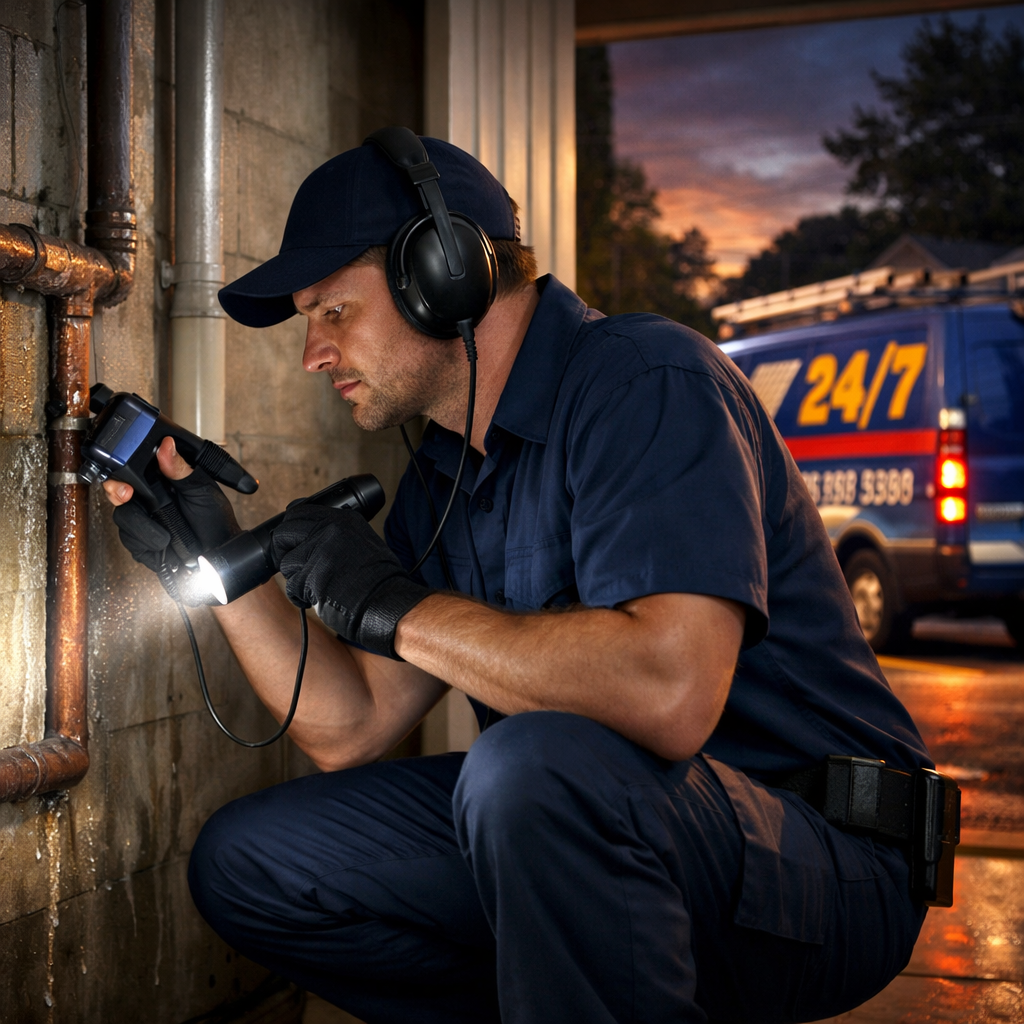
Louisville 24/7 Leak Detection: How to Get Service Today
Can you get leak detection in your Louisville home today
Yes—same-day and 24/7 leak detection is available in Louisville. AC Repair Advisor helps you quickly compare Louisville providers and request urgent service. Many providers operate round-the-clock dispatch for emergency plumbing and water leak repair, including Roto-Rooter’s Louisville team (24/7 line: 502‑583‑1550), which publicly lists emergency service and leak repair support at all hours [Roto-Rooter Louisville]. If you’re seeing water stains, musty odors, mold growth, hearing water when fixtures are off, or noticing a sudden spike in your water bill, call now—these are classic triggers for same-day leak detection Louisville homeowners shouldn’t ignore, and they justify emergency plumbing Louisville dispatch for active issues [Glanz & Buffat: Types of Leak Detection]. Ask for same-day leak detection, and request an on-arrival estimate before any invasive work begins.
Step 1: Confirm leak signs and stop immediate damage
Act fast when signs are clear: unexplained damp spots, musty odors, visible stains, mold, or water sounds when no fixture is running should prompt immediate action. For flooding or a rapidly growing wet area, shut off the main water to limit damage and reduce safety risks—this aligns with widely accepted best-practice guidance for leak incidents [EPA Leak Detection & Repair Best Practices]. Photograph the scene and move valuables, electronics, and papers out of wet zones to prevent secondary losses while you await water leak repair Louisville support.
Step 2: Gather key details to speed triage
Have concise, practical information ready when you call:
- Your address and any gate/entry/parking instructions
- Suspected leak locations and visible signs (stains, sounds, odors)
- Whether the leak is active or intermittent
- Recent plumbing/HVAC work and any shutoff steps already taken
- Water meter number and current reading (if safe to access)
Expect quick questions like: Where is the issue? When did it start? How much water? Any electricity or gas concerns? Can you share photos/video?
Step 3: Contact a 24/7 Louisville leak detection line
You can start with AC Repair Advisor to identify available 24/7 Louisville leak detection pros, then call to confirm the fastest arrival window. For active leaks, call a 24-hour plumber Louisville dispatch line immediately. Louisville providers maintain 24/7 phones and offer same-day service windows; if call volume is high, online booking can still secure a near-term slot [Roto-Rooter Louisville]. Call from a quiet area, enable call-back, and be ready to text or email photos/video if offered; many Louisville emergency plumbing providers support rapid digital triage to accelerate on-site diagnostics [ASI Plumbing—Emergency Plumbing in Louisville].
Step 4: Follow remote triage guidance while help is en route
Dispatchers or technicians may talk you through temporary containment: shutting a localized valve, placing buckets, using towels to divert drips, or switching off nearby circuits if water is approaching outlets. Some companies provide en‑route triage so you can stabilize safely while waiting [ASI Plumbing—Emergency Plumbing in Louisville]. Clear access to mechanical rooms, laundry areas, under-sink cabinets, crawlspaces, and the basement so techs can begin diagnostics immediately.
Step 5: What to expect during on-site diagnostics
Leak detection is the process of locating water losses from pressurized or gravity-fed systems using tools that sense moisture, temperature, sound, or pressure anomalies. Pros begin with noninvasive tests, confirm with targeted methods if needed, and document findings before recommending surgical access or repairs. Expect a sequence: quick visual and meter checks, non-destructive scans, then targeted confirmation, followed by a transparent review of options and pricing.
Noninvasive tests used first
- Thermal imaging: Technicians scan finished spaces for temperature differences that reveal moisture paths—fast, noninvasive, and ideal for hidden pipe leaks behind drywall [Glanz & Buffat: Types of Leak Detection].
- Acoustic listening: Sensitive sensors pick up the distinct frequency signature of escaping water. By triangulating the sound, pros can pinpoint likely leak locations with minimal disruption [SoftDig: Water Leak Detection Guide].
- Video inspection: For drain and many water lines, plumbers run camera scopes to visually verify leaks, root intrusions, and blockages, capturing footage for your records [Glanz & Buffat: Leak Detection & Repair in Louisville].
Targeted methods for hard-to-find leaks
- Tracer gas: A non‑toxic hydrogen/nitrogen blend is introduced to the system; detectors sense minute gas escapes to locate very small leaks without demolition [Glanz & Buffat: Types of Leak Detection].
- Ground-penetrating radar (GPR): Scans through soil, rock, and slabs to map utilities and spot underground leak anomalies—ideal for buried or under‑slab lines [SoftDig: Water Leak Detection Guide].
- Hydrostatic testing: Isolates sewer sections and uses pressure gauges to confirm leaks or breaks before excavation [CallMother: Best Tools to Locate Underground Leaks].
- Large mains/complex networks: Utilities use tools such as SmartBall for long-distance leak screening, Sahara for real-time listening, and SL‑RAT for quick acoustic assessments—demonstrating that early acoustic “listening” can prevent major breaks [Louisville Water: Listening for a Leak?].
Documentation and estimate review
Ask for clear proof before approving invasive work:
- Photos/thermal images, acoustic readings, and camera footage
- A written diagnostic summary with next steps
- A line‑item estimate covering diagnostics, access, repair, materials, and post-repair testing
- Whether the provider guarantees locating the leak without unnecessary excavation
If multiple methods are proposed, use a simple comparison like this:
| Method | Purpose/When Used | Invasiveness | Est. Time/Cost Range | Verification Plan |
|---|---|---|---|---|
| Thermal imaging | Hidden leaks in finished areas | Noninvasive | 30–60 min; low–med | Moisture readings + follow-up scan |
| Acoustic listening | Pressurized line leaks in walls/slabs | Noninvasive | 30–120 min; med | Repeat listen for silence at hot spot |
| Video inspection | Inside drains/water lines | Low (via cleanouts/fixtures) | 45–120 min; med | Recorded footage of joints/sections |
| Tracer gas | Very small or intermittent leaks | Low (via valves/ports) | 60–180 min; med–high | Detector confirms zero gas escape |
| GPR | Buried/under‑slab utilities | Noninvasive surface scan | 60–180 min; high | Marked map + correlation test |
| Hydrostatic test | Sewer segment integrity | Low (isolation plugs) | 60–180 min; med–high | Stable pressure over timed hold |
Step 6: Approve repair, verify results, and prevent recurrence
Authorize the least invasive repair that reaches the confirmed leak location. Ensure there’s a clear change‑order process for surprises behind walls or under slabs. Require verification before closing any access: pressure or flow stabilization, moisture normalization, and clean camera footage where applicable—all documented in writing with photos. If you want a second quote for scope or pricing, AC Repair Advisor can help you compare options without delaying critical repairs.
Post-repair testing and confirmation
Define “done” with a pass/fail checklist: stable pressure/flow, no acoustic signatures at prior hot spots, moisture readings trending to normal, and clean camera views of joints. Ask for timestamped photos/video and a brief post‑repair report summarizing tests performed and results.
Install smart sensors and schedule follow-ups
Place Wi‑Fi water sensors in bathrooms, basements, utility rooms, laundry areas, and sump pits. Local pros note basements are the most likely area to sustain water damage over a home’s lifespan, and sensors can also flag high water levels from a failing sump pump—catching issues early saves money and disruption [Jarboe’s: Water Leak Detector]. Add a maintenance step: install sensors under washing machines and replace hoses periodically to prevent avoidable floods.
Louisville readiness checklist for same-day service
- Main shutoff and isolation valves located; water meter number handy
- Clear access to suspected areas and mechanical spaces
- Photos/videos of leaks ready to share
- Pets secured; parking and entry instructions prepared
- List of recent plumbing/HVAC work and any DIY steps taken
- Keep towels and buckets available, but move extension cords and power strips away from wet zones
How pros choose the right detection method
Pros match tools to context—location (wall, slab, yard), accessibility, pipe type/material, and whether the system is pressurized or gravity-fed—often combining thermal, acoustic, tracer gas, and cameras for accuracy [Glanz & Buffat: Types of Leak Detection]. Louisville Water actively uses acoustic listening to find small leaks and make repairs before main breaks, underscoring the value of early, low‑disruption detection [Louisville Water: Listening for a Leak?]. Advanced options like GPR or system-wide acoustic mapping come into play outdoors or under slabs, while some “leaks” are actually internal valve or fixture flow issues that require different diagnostics rather than excavation.
Cost factors and insurance documentation basics
Leak detection cost Louisville pricing varies with method, location (behind walls, under slabs, outdoors), access complexity, and after‑hours dispatch. Utilities and contractors recommend an assessment-first approach to prevent unnecessary demolition and select the right tool for the job [SoftDig: Water Leak Detection Guide]. Key cost drivers:
- Access level (finished surfaces vs. accessible areas)
- Pipe material/diameter and system type
- Need for GPR, tracer gas, or hydrostatic testing
- After-hours/24‑7 response and travel
- Post-repair verification testing and documentation
Keep everything: written diagnostics, photos/thermal images, camera files, pressure logs, and invoices. Strong insurance documentation for water leaks demonstrates due diligence and can support claims for both detection and resulting damage.
Safety, utility shutoffs, and when to treat it as an emergency
Treat the following as emergencies: active flooding, bulging ceilings, water near electrical outlets or panels, sewage backups, or an unknown leak source. Shut off water at the main if safe, avoid standing water near electricity, and call a 24/7 line immediately. If sewage is involved, hydrostatic testing may be part of the diagnosis before any excavation [CallMother: Best Tools to Locate Underground Leaks]. When in doubt, use AC Repair Advisor to reach a 24/7 Louisville pro right away. Emergency leak response means immediate shutoffs, containment, and rapid dispatch to prevent injuries, mold growth, and structural damage in the first critical hours.
Frequently asked questions
How fast can a 24/7 Louisville leak detection tech arrive
Many providers offer same-day and 24/7 emergency dispatch. Use AC Repair Advisor to reach the nearest available pro; actual arrival depends on location and call volume, but urgent lines prioritize active leaks.
Should I shut off my main water before the technician arrives
Yes—if water is actively flowing, shut off the main to limit damage. For slow or uncertain leaks, contact a 24/7 line or use AC Repair Advisor for quick guidance to avoid disrupting diagnostics.
What leak detection methods avoid opening walls or slabs
Thermal imaging, acoustic listening, and video pipe inspection can pinpoint likely sources without demolition; targeted access is used only when confirmation or repair requires it. A local pro can explain when that step is necessary, and AC Repair Advisor helps you connect with one.
How much does leak detection typically cost in Louisville
Pricing depends on method, access challenges, and repair complexity. Expect an assessment-first visit and a written estimate before any invasive work begins; AC Repair Advisor can help you compare quotes.
Will insurance cover leak detection and damage repairs
It varies by policy and cause. Document everything—photos, diagnostics, and invoices—and contact your insurer promptly; AC Repair Advisor can help you find pros who provide thorough documentation.