Hybrid Heat Pump vs Traditional HVAC: Butler County Options and Installers
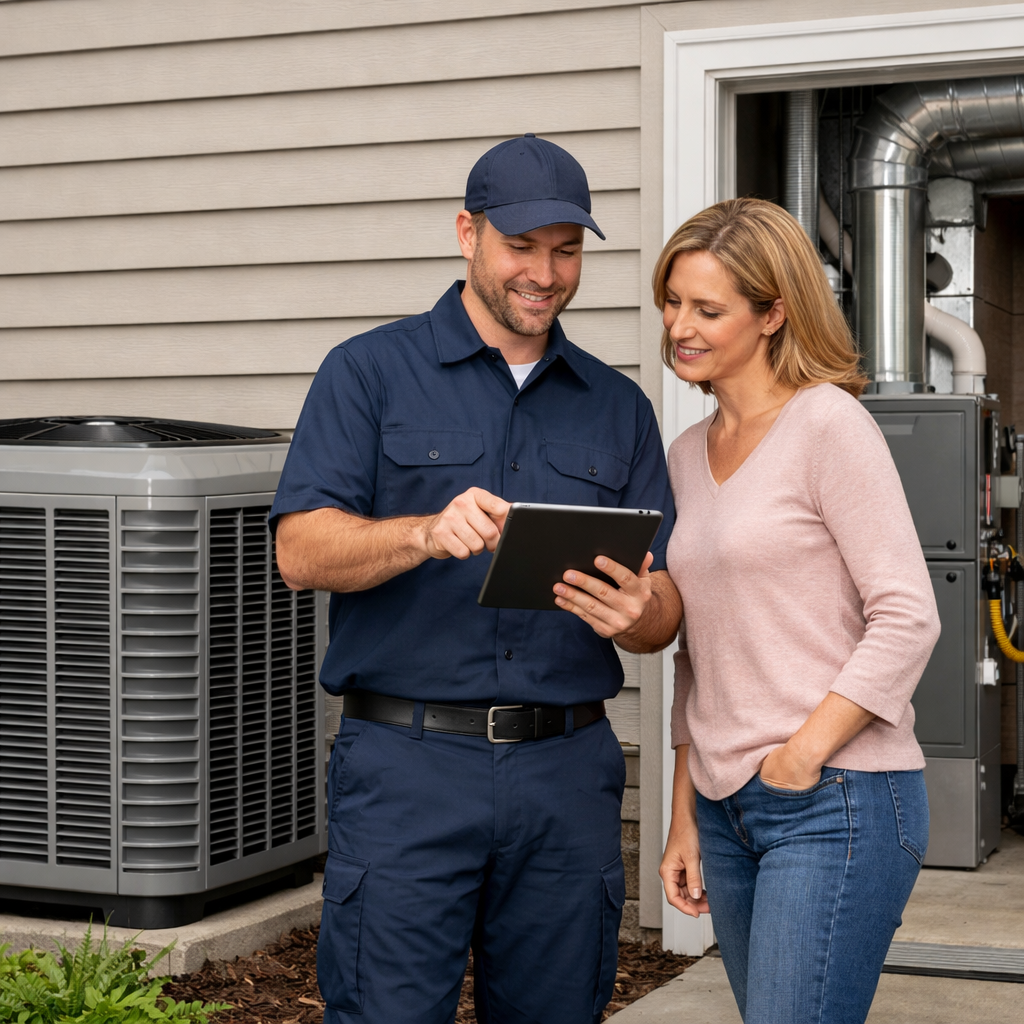
Hybrid Heat Pump vs Traditional HVAC: Butler County Options and Installers
Upgrading your home’s heating and cooling in Butler County comes down to one big choice: a hybrid (dual‑fuel) heat pump or a traditional furnace plus AC. In our mixed Midwest climate—cold snaps, long shoulder seasons, humid summers—hybrids often deliver the best year‑round efficiency without sacrificing winter comfort. Below, we explain how systems differ, what they cost, how they perform in cold weather, and how to find vetted Butler County HVAC installers for cold‑climate heat pumps and hybrid setups. If you want apples‑to‑apples bids, AC Repair Advisor helps you compare model‑level quotes, warranties, and projected payback from multiple local pros.
Overview of heating and cooling choices in Butler County
Hybrid heat pump (dual‑fuel): A hybrid system pairs a heat pump with a gas, propane, or oil furnace on the same ductwork. The heat pump handles efficient heating and all cooling; when outdoor temps fall near the balance point, controls switch to the furnace automatically to maintain comfort and reduce costs (shared blower/controls) custom dual‑fuel overview.
Traditional HVAC: A conventional setup combines a combustion furnace for heating with a separate central air conditioner for cooling. It’s familiar, durable, and straightforward to service. Cooling performance in summer is essentially the same as with a heat pump of comparable SEER; differences show up mainly in heating efficiency and modulation.
Cold‑climate heat pump: An advanced air‑source heat pump optimized for low‑temperature operation using features like enhanced vapor injection, larger coils, and smart defrost. These models keep meaningful capacity in sub‑freezing weather, enabling all‑electric heating for many homes while still covering summer cooling with high efficiency.
Ductless mini‑split: A heat pump without ducts that uses one outdoor unit feeding one or more compact indoor heads. It avoids duct losses, offers zoned comfort room‑by‑room, and can be ideal for additions, older homes with weak ducts, or targeted problem rooms—while still delivering efficient cooling and shoulder‑season heating.
Heat pumps move heat rather than creating it by combustion, so in mild weather they can deliver 200–400% efficiency (a coefficient of performance above 2–4), dramatically lowering operating costs versus electric resistance or oil heat heat pump basics and efficiency.
If you’re comparing a hybrid heat pump vs traditional HVAC in Butler County, look for Butler County HVAC installers with dual‑fuel systems experience and ask about cold‑climate heat pumps for lowest winter temps.
How a hybrid heat pump differs from traditional HVAC
A hybrid (dual‑fuel) system combines a heat pump and a furnace on shared ductwork and controls; it automatically switches to the furnace when outdoor temps drop to a set balance point and the heat pump becomes less efficient dual‑fuel system explanation.
Traditional HVAC means a furnace for heating plus a separate central AC for cooling. In summer, a heat pump and an air conditioner of similar ratings cool essentially the same; the big differences are winter efficiency, controls, and whether you want a combustion backup.
What to compare at a glance:
- Components: Hybrid = heat pump + furnace; Traditional = furnace + separate AC
- Controls: Hybrid automates fuel switching by outdoor temp; Traditional switches modes but not fuels
- Seasonal efficiency: Hybrid uses the cheapest/most efficient source by weather; Traditional relies on the furnace for all heat
- Maintenance complexity: Hybrid has two heating appliances; Traditional has one
- Typical scenarios: Hybrid suits mixed climates and mixed fuel pricing; Traditional fits lowest upfront cost or when a newer furnace is already in place
Key decision criteria for Butler County homes
Quick checklist:
- Climate and cold‑weather performance (see “Climate suitability and cold weather performance”)
- Energy efficiency and operating costs (see “Energy efficiency and operating costs”)
- Upfront cost and payback (see “Upfront cost and payback timelines”)
- Comfort, noise, and air distribution (see “Comfort, noise, and air distribution”)
- Maintenance and reliability (see “Maintenance complexity and reliability”)
- Emissions impact (see “Environmental impact and emissions”)
- Butler County heat pump rebates and permits (see “Rebates, tax credits, and local utility incentives”)
Who is each best for?
- Hybrid/dual‑fuel: Homeowners wanting lower bills most of the year plus a furnace for deep‑cold peace of mind; great if your existing furnace is serviceable and you want to reuse ducts.
- Cold‑climate heat pump: Electrification‑minded homes ready to go all‑electric with solid insulation/air sealing and design temps in the teens.
- Traditional furnace + AC: Lowest upfront cost, or when your furnace is newer and you prefer simpler controls.
- Ductless mini‑split: Homes without ducts, problem rooms, additions, or when you want zoned comfort and minimal disruption.
Climate suitability and cold weather performance
Standard heat pumps can lose efficiency as temperatures dip near freezing; cold‑climate models are engineered to hold capacity deeper into winter and avoid excessive reliance on backup heat. Many cold‑climate units maintain roughly 75% of rated capacity at 5°F and can operate down to about −15°F cold‑climate performance data.
Mini‑table for planning:
| Metric | Typical value for Butler County homes |
|---|---|
| Typical winter lows | Teens to low‑20s °F (occasional single digits) |
| Heat pump capacity at 5°F (cold‑climate) | ~75% of rated capacity |
| Hybrid switch‑over temperature | Commonly 30–40°F; set per Manual J/balance point |
| Backup heat advised? | Yes, for deep cold and power outages; furnace or staged electric |
Energy efficiency and operating costs
Coefficient of performance (COP) describes how many units of heat a heat pump delivers per unit of electricity consumed. Because heat pumps move heat rather than create it, COP can exceed 1.0 by a wide margin; in mild weather, COPs of 2–4 (200–400% efficient) are common, slashing bills versus resistance heat COP explained and efficiency ranges.
Whole‑house heat pumps are typically several times more efficient than resistance or oil heat, especially in shoulder seasons. Hybrids cut operating costs further by using the most efficient source at any given temperature—heat pump when mild, furnace when frigid—so you avoid paying more than you need to for each degree of heat.
Upfront cost and payback timelines
Typical installed ranges:
- Whole‑house heat pump: $8,000–$15,000
- Furnace (heating only): $3,000–$8,000
- Hybrid retrofit (heat pump + existing/ new furnace): $12,000–$25,000
Payback commonly runs 3–8 years—and often 3–5 years when replacing oil or propane—because the system automatically favors the lower‑cost fuel source as weather changes hybrid cost and payback overview. Pairing a heat pump with a good‑condition furnace can cut upfront cost, and hybrids can use a smaller heat pump sized for shoulder‑season loads.
DIY payback calculator outline:
- Inputs: Current fuel/electric rates, annual usage (therms, gallons, kWh), proposed system SEER2/HSPF2/COP, furnace AFUE, switchover temperature
- Outputs: Annual energy cost with each option, savings vs. current system, 3–8 year payback estimate
Comfort, noise, and air distribution
Variable‑speed compressors and blowers modulate output, reducing temperature swings, drafts, and cycling noise while improving humidity control—key to day‑to‑day comfort field perspective on variable‑speed comfort. Cooling performance is comparable between a heat pump and AC of similar ratings; comfort differences show up in how gently systems can ramp heat and distribute airflow. Ask installers to evaluate duct quality, static pressure, and zoning; use ductless mini‑splits for rooms that are hard to condition.
Maintenance complexity and reliability
Hybrids contain two heating appliances (heat pump and furnace), adding components and maintenance touchpoints versus a single‑fuel setup; expect more comprehensive seasonal checks and filter discipline hybrid system maintenance considerations. To address reliability concerns and switching issues, insist on controls testing, documented commissioning, and a service plan with clear response times dual‑fuel reliability research.
Maintenance table (typical):
| Season | Heat pump tasks | Furnace tasks | Typical annual cost | Who |
|---|---|---|---|---|
| Spring | Clean outdoor coil, check refrigerant pressures, test condensate | — | $100–$200 | Pro |
| Fall | Verify defrost, test sensors/thermostat, replace filter | Combustion safety, heat exchanger, igniter, flue | $150–$300 | Pro |
| Quarterly | Replace/clean filters | Replace/clean filters | $40–$120 (filters) | Homeowner |
Environmental impact and emissions
Modern air‑source heat pumps can be 2–4× more efficient than resistance or oil heat, and a whole‑house heat pump swap can trim household CO2 by roughly 40% versus a gas furnace, depending on grid mix and home envelope independent heat pump efficiency and emissions findings. Hybrids reduce fossil use most of the year while keeping a furnace as an efficient, low‑risk backup during deep freezes.
Simple CO2 comparison (illustrative):
- Furnace‑only: ██████████ (100%)
- Hybrid (dual‑fuel): ████████ (≈70–80%)
- Cold‑climate heat pump: ███████ (≈60%)
Side‑by‑side comparison of system types
| System | Best climate fit | Installed cost | Efficiency | Maintenance | Ideal use cases |
|---|---|---|---|---|---|
| Hybrid (dual‑fuel) | Mixed climates with frequent 25–45°F days and episodic deep cold | $12k–$25k | High overall; uses cheapest fuel by weather | Higher (two heat sources) | Cut bills, keep furnace for cold snaps; reuse ducts |
| Cold‑climate heat pump | Cold winters to the teens/single digits with good envelope | $8k–$15k (all‑electric) | Very high, even below freezing | Moderate | Electrify with reliable winter performance |
| Traditional furnace + AC | Any climate; lowest upfront complexity | $7k–$14k (combined) | Good cooling; heating depends on AFUE | Moderate | Lowest first cost; newer furnace in place |
| Ductless mini‑split | Zoned comfort; homes without ducts | $4k–$12k per multi‑zone | Very high; no duct losses | Low–moderate | Additions, problem rooms, partial electrification |
Definitions in a sentence:
- Hybrid or dual‑fuel heat pump: A heat pump plus a furnace sharing ductwork; automatic temperature‑based switching optimizes comfort and cost.
- Cold‑climate heat pump: A low‑temp‑optimized air‑source heat pump that preserves capacity and efficiency in sub‑freezing conditions.
- Traditional furnace + AC: Separate heating and cooling appliances using combustion for heat and a conventional condensing unit for summer.
- Ductless mini‑split: A duct‑free heat pump that conditions one or more zones with compact indoor heads.
Installed cost ranges and total cost of ownership
| System type | Typical installed cost |
|---|---|
| Whole‑house heat pump | $8,000–$15,000 |
| Furnace (heating only) | $3,000–$8,000 |
| Hybrid retrofit (heat pump + furnace) | $12,000–$25,000 |
Payback guidance: 5–8 years is typical; 3–5 years when replacing oil/propane. Pairing a new heat pump with a good‑condition furnace can trim upfront costs and let you right‑size the heat pump.
Total cost of ownership checklist:
- Utility rates (gas, propane, electricity), expected hours of use
- Efficiency ratings (SEER2, HSPF2/COP, AFUE), chosen switch‑over temperature
- Filter and service plan costs, parts/labor coverage, expected lifespan
- Duct repairs or airflow corrections included in bid
Rebates, tax credits, and local utility incentives
A federal tax credit helped accelerate heat pump adoption through the end of 2025; check current federal, state, and utility incentives before you buy. Many Butler County utilities offer rebates for cold‑climate heat pumps and dual‑fuel systems.
How to capture incentives:
- Confirm model eligibility (meets program SEER2/HSPF2/COP and cold‑climate criteria).
- Ask your installer for the AHRI certificate and permit numbers.
- Submit the utility application with required documentation.
- Verify your contractor provides commissioning data and completion photos.
Common documents: Paid invoice, model/serial numbers, AHRI certificate, Manual J load calc summary, permit/inspection sign‑off.
Butler County installer selection checklist
- Get at least three quotes including Manual J, duct static pressure and leakage tests, model‑level performance curves, thermostat/controls setup, parts and labor warranties, and projected payback.
- Prioritize manufacturer‑certified Butler County HVAC installers with verified dual‑fuel or cold‑climate references; ask for lifecycle cost estimates to address concerns about complexity and maintenance.
- Compare quotes side‑by‑side for model numbers, efficiency ratings, switch‑over temperature, and warranty terms. AC Repair Advisor can coordinate side‑by‑side Butler County quotes that include these details.
Manual J load calculation and duct evaluation
Require a room‑by‑room Manual J (the industry‑standard calculation of your home’s heat loss/gain), a duct static pressure test, and a duct leakage check. Ask for a written airflow plan with target CFM per room and any duct corrections priced into the bid.
Cold‑weather performance curves and controls setup
Ask bidders for model‑specific capacity/efficiency at 47°F, 17°F, 5°F, and −5°F, plus the proposed switch‑over temperature. Confirm an outdoor temperature sensor, balance‑point programming, and integrated thermostat logic for seamless hybrid switching. Request commissioning data at startup.
Warranty coverage and service plans
Get written parts and labor coverage terms and confirm installations are registered with the manufacturer dealer network. Review service plan options, included annual maintenance tasks, and response times. Compare warranty lengths and exclusions across quotes.
References, certifications, and brand training
Request recent local dual‑fuel or cold‑climate installations with homeowner references. Prioritize brand‑certified training (e.g., Mitsubishi, Bosch) and proof of commissioning checklists. Verify permits, insurance, and licensing.
Where to find hybrid heat pump setups in Butler County
- Contact AC Repair Advisor to compare multiple Butler County installers and warranty‑backed installations; we recommend obtaining at least three local quotes.
- Search “hybrid heat pump installers near me” and filter manufacturer dealer locators for “dual‑fuel” and “cold‑climate” badges; ask for hybrid‑ready thermostats/controls in quotes.
- Confirm whether your existing ductwork can be reused to reduce cost and disruption; ask bidders to test static pressure and propose any duct fixes up front.
AC Repair Advisor recommended process to compare installers
Use this four‑step sequence—each step doable via a single call or email—to lock in the right system at the right price.
Get three quotes with model‑level details
Require model numbers, AHRI certificates, and heating capacity at 17°F and 5°F, along with the proposed switch‑over temperature. Each bid should include a Manual J, duct static pressure readings, and a completion‑day commissioning checklist.
Ask for warranty‑backed installations
Get written parts and labor terms and proof of manufacturer registration. Confirm the installer holds brand certifications for the proposed hybrid/heat pump and offers emergency service with stated response times.
Request lifecycle cost and payback estimates
Have bidders model energy bills versus your current system, stating rate and usage assumptions. Ask for 3–8 year payback projections—and 3–5 years if you currently heat with oil or propane—plus maintenance plan costs for a true TCO view.
Verify rebate handling and permit support
Confirm the contractor pulls permits, schedules inspections, and completes all rebate paperwork with model/serial and AHRI numbers. Request a timeline for approvals and funding.
When a hybrid system makes the most sense locally
Choose a hybrid when:
- Fuel prices are uncertain and you want the system to auto‑select the lowest‑cost source
- Your furnace is older but serviceable, and you want to add efficient cooling plus shoulder‑season heat
- Winter lows routinely hit the teens or single digits and you want zero‑drama comfort in cold snaps
- You aim to cut emissions most of the year without giving up a proven backup
Many Butler County homeowners recoup hybrid costs in about 5–8 years—and in 3–5 years when replacing oil or propane—because hybrids use the most efficient method in the moment to lower bills. AC Repair Advisor can help you verify expected savings using local quotes and rate assumptions.
Frequently asked questions
Will a hybrid heat pump save money versus my current furnace and AC?
Yes—most homes see lower bills because the system automatically uses the most efficient heat source by temperature. Typical payback is about 5–8 years, faster (3–5 years) when replacing oil or propane systems; AC Repair Advisor can model this from local quotes.
Can a hybrid heat pump handle Butler County winters without comfort issues?
In most cases, yes. The heat pump covers mild‑to‑cold days and the furnace takes over in deeper cold; proper switch‑over settings and commissioning are key, and AC Repair Advisor can connect you with installers who handle both well.
Do I need to replace my existing furnace to go hybrid?
Not always. Many homeowners pair a new heat pump with a good‑condition existing furnace to reduce upfront cost while adding efficient heating and cooling; AC Repair Advisor can verify compatibility in your quotes.
How long does installation take and what maintenance is required?
Most installations take 1–3 days depending on duct changes. Expect annual maintenance for both the heat pump and furnace—filters, coil cleaning, safety checks, and controls testing; AC Repair Advisor helps you compare maintenance plans.
Are there rebates or tax credits available for heat pumps and hybrid systems?
Incentives change frequently. Check current federal, state, and utility rebates, and ask your installer to handle eligibility paperwork and permits; AC Repair Advisor helps you confirm requirements with your contractor.