How to Get AC Repair Financing in Louisville With Bad Credit
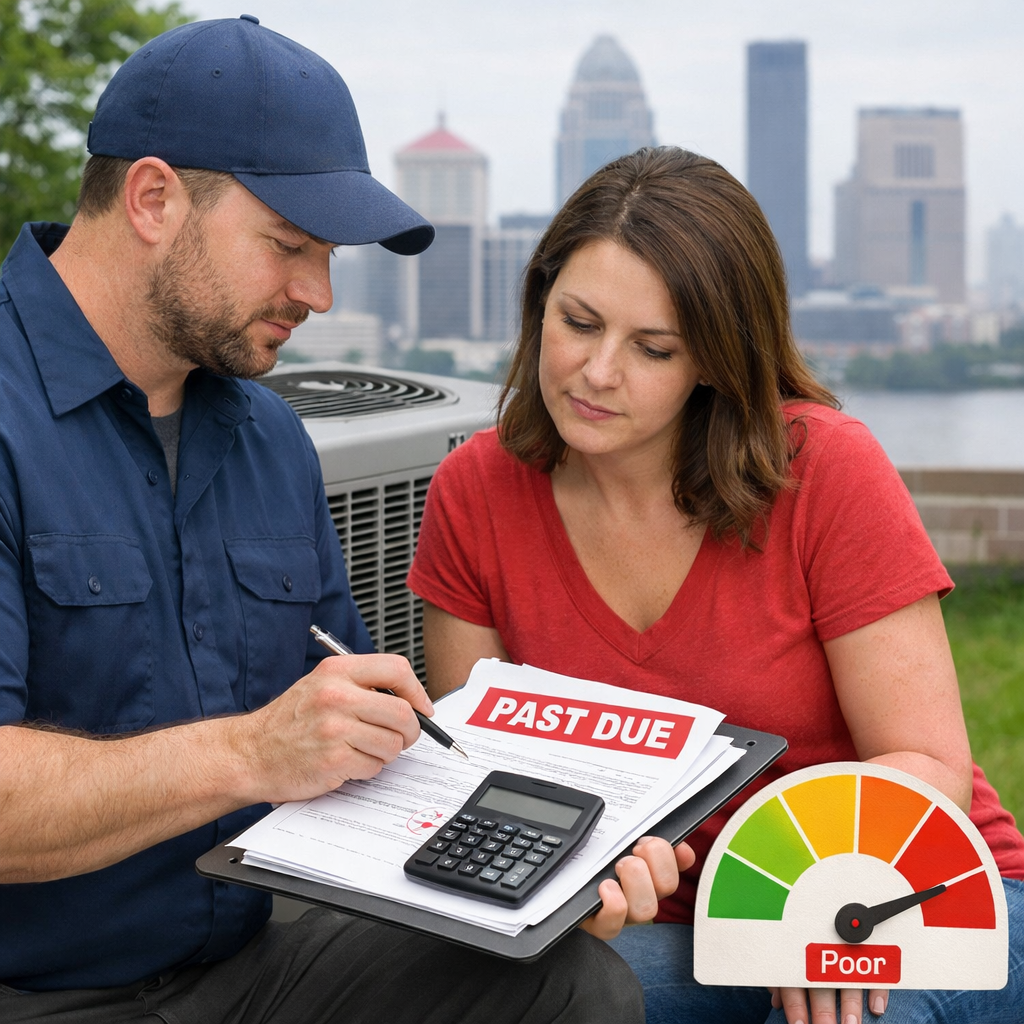
How to Get AC Repair Financing in Louisville With Bad Credit
A broken AC in Louisville’s summer heat can’t wait—even if your credit isn’t perfect. The good news: you can still secure HVAC financing with bad credit in Louisville KY by following a clear, defensible process. Start by defining your project scope and true installed cost, then vet local, licensed contractors who document best practices. Prequalify with soft-credit pulls to compare offers without hurting your score, and choose the option with the lowest lifetime cost—not just the smallest monthly payment. Many lenders and marketplaces let you see rates instantly and can fund quickly, sometimes within 24 hours, making urgent repairs or replacements feasible even with less-than-ideal credit, as detailed in reputable AC financing guides for bad credit. This AC Repair Advisor guide lays out a practical path you can follow today.
Define your project scope and budget
Pin down the full installed cost before you apply. In Louisville, many common AC repairs fall roughly in the $160–$520 range, while full central AC replacements can run $5,000+ depending on tonnage, efficiency, and ductwork. Request line-item proposals that include equipment, labor, permits, electrical, duct fixes, and startup commissioning so you don’t under-finance the job. Secure at least two local HVAC repair estimates first so financing approvals align with your final scope and timing. For larger projects, use “AC replacement cost Louisville” in your notes and capture the total installed cost you’ll actually need to finance.
Build a local shortlist of Louisville HVAC contractors
Identify 3–5 Louisville HVAC contractors that advertise flexible financing or quick approvals for credit-challenged buyers. Local examples that promote financing include Jarboe’s financing page and Prudential’s financing options. When you call, AC Repair Advisor recommends being direct and specific:
- Ask about in-house/dealer financing, credit union partners, and any lease-to-own options that can consider income and bank history beyond FICO.
- Confirm whether they offer promo terms (e.g., 0% intro), longer fixed-APR plans, and what documents are required.
- Capture details in a simple table for apples-to-apples comparison:
| Contractor | Financing Partner(s) | Sample Promo | Term Options | Docs Required | Notes |
|---|---|---|---|---|---|
| Contractor A | Lender X | 0% for 6 mo | 24–60 mo | ID, income, bank history | Same/next-day decisions |
| Contractor B | Lender Y | Fixed 9.99% | 36–84 mo | ID, income | Can include ductwork |
Verify licenses, insurance, and credentials
Before you sign any financing, request proof of state/local HVAC license, general liability, and workers’ comp. Confirm NATE-certified techs and factory training where applicable; better installations protect efficiency and warranty support. Many lenders and promos require licensed installation to keep warranties valid—document license numbers and insurance in your contract packet.
Require documented best practices in every proposal
Insist that each bid commits—in writing—to proper load calculation, airflow testing, refrigerant charging, and final commissioning with data logs. Require attachments you can file with the lender and manufacturer: setup checklists, model/serials, photos, balancing results, and a commissioning report. These HVAC best practices protect comfort, efficiency, and eligibility for warranties and rebates.
Manual J load calculation and airflow verification
Manual J is the industry-standard residential load calculation that sizes HVAC systems based on your home’s orientation, insulation, window performance, occupancy, and climate. Right-sizing prevents short cycling and humidity issues while improving comfort, efficiency, and system life. Require a Manual J summary plus measured static pressure and delivered CFM room-by-room; reject any “like-for-like” replacement without a current load and duct evaluation.
Commissioning, refrigerant charge, and documentation
Require startup commissioning with superheat/subcool verification, controls calibration, and a signed report. Ask for photos of gauge readings and final charge calculations. Your turnover package should include thermostat setup, filter sizes, a maintenance schedule, and warranty registration receipts.
Written parts and labor warranties
Get warranty terms in writing: coverage length, what’s included/excluded, and response times. Where possible, align labor coverage with your loan term. Confirm that installation and financing choices preserve manufacturer warranties, and have contractors note this explicitly in their proposals. Consider a simple comparison table tracking warranty length, covered components, and transferability for each bid.
Get at least three apples-to-apples quotes
Standardize the scope across bids so you can compare true value: equipment model numbers, SEER2/HSPF2, duct repairs, permits, commissioning, and warranty terms. Next to each bid, list estimated monthly payment and total lifetime cost (principal + interest + fees). In-house dealer plans can often cover the full installed cost—equipment, labor, and permits—so verify that coverage upfront per HVAC financing option guides.
Prequalify with soft pulls to compare financing offers
Many marketplaces and lenders let you see estimated rates with a soft credit pull, which won’t affect your score. Use prequalification tools first and space any hard inquiries to protect your credit, as consumer credit experts recommend. Collect APR ranges, term options, fees, and funding speed; some platforms can deliver funds in as little as 24 hours, according to AC financing for bad credit resources. AC Repair Advisor recommends starting with soft pulls so you can compare offers without adding score impact.
Prioritize the lowest total cost over the life of the loan
Evaluate total dollars paid, not just the monthly. Tally principal + interest + origination or merchant fees + any deferred-interest backcharges. Deferred interest is a promotion where interest accrues during the promo, but isn’t charged if you pay the full balance by the deadline; miss the payoff, and all accrued interest can be added retroactively, spiking total cost. Remember that average credit card APRs hover around 20%, making long-term balances expensive per HVAC financing overviews. AC Repair Advisor prioritizes total cost over teaser payments to protect your budget.
Explore Louisville-friendly alternatives beyond dealer plans
Consider a mix of options and stack savings to reduce what you finance:
- Dealer financing: Streamlined approvals, promo offers; confirm fees and deferred-interest rules.
- Personal loans/marketplaces: Fast funding, fixed rates; watch origination fees.
- Credit unions/community banks: More flexible underwriting; often lower APRs if you can qualify.
- Lease-to-own: Quick approvals with income/bank-history underwriting; may cost more overall.
Local credit unions and community banks
Credit unions and community banks often evaluate broader factors and can be more flexible for bad credit borrowers. Ask about secured personal loans, HELOCs, or a cosigner to lower APR. Typical guidelines include steady income around $25,000 and a debt-to-income ratio under roughly 45%, according to consumer lending guidance.
Lease to own and rent to own considerations
Lease-to-own lets you rent HVAC equipment with the option to purchase later. Approvals are often faster and may weigh income and bank history more than credit score. Monthly costs can be higher—review the contract for the total price, fees, and ownership path. Some “no credit needed” programs advertise instant approvals up to $12,000 with payments from $99; scrutinize total cost and fees as noted by no-credit-check HVAC financing providers. Dealer captive financing can include 0% promos or deferred interest—confirm fees and fine print first using HVAC financing option checklists.
Secured options, rebates, and assistance programs
Property Assessed Clean Energy (PACE) financing pays for energy upgrades via a special assessment on your property tax bill. Repayment is tied to the property and may transfer at sale; availability and terms vary by locality and program. Check your state energy office or utility rebate portals for incentives and requirements that can reduce the amount you need to finance, per consumer finance advice. And remember: carrying balances on high-APR credit cards can greatly increase total cost, as HVAC financing analyses warn.
Improve approval odds with better documentation
A strong file can secure approvals and better pricing, even with low scores. Gather a government ID, proof of income, 2–3 months of bank statements, a utility bill, your contractor’s quote, and any planned down payment. Many programs look beyond FICO and consider income stability and banking history with soft-pull prequalification, as HVAC financing options for bad credit explain. Keywords to know: no credit check HVAC, bad credit HVAC approval, prequalification.
Income proof, bank history, and down payment
Provide recent pay stubs, 2–3 months of bank statements, and prior-year tax returns if income is variable. Targets often include steady income near $25,000 and DTI under ~45%, and a modest down payment can improve approval odds and APR, per consumer credit guidance. Include a simple budget showing you can afford the quoted monthly payment.
Cosigner or collateral strategies
Ask a family member with stronger credit to cosign—both parties are equally responsible for repayment. Consider secured options like collateralized personal loans or a HELOC to reduce APRs versus unsecured loans; confirm lien details, repayment terms, and any insurance requirements, as lending experts advise.
Read the fine print before you sign
Protect yourself by verifying the written APR, all fees, and total cost before signing—transparent disclosures are a hallmark of safe financing. Confirm funding speed, first payment date, autopay setup, and whether early payoff is allowed without penalty. Keep notes on HVAC financing terms, including how APR differs from the nominal interest rate, and any prepayment penalty. AC Repair Advisor favors plain-language terms and no prepayment penalties when possible.
APR, fees, and prepayment terms
List each offer’s APR, term, origination or merchant fees, late fees, and prepayment penalties side-by-side. Run a quick total-cost comparison:
- Offer A: $8,000 at 0% for 12 months (merchant fee 6%). Pay off in 12 months = $8,480 total.
- Offer B: $8,000 at 9.99% for 60 months, no origination. Approx. payment $171; total ≈ $10,260. If you can’t confidently clear Offer A in 12 months, Offer B may be safer despite the higher total.
Deferred interest and promotional period risks
If a promo uses deferred interest, missing the payoff date can add all accrued interest retroactively. Get the schedule and payoff amount in writing. Some Louisville dealers advertise 0% or “no-interest-if-paid-in-6-months” offers; verify exact conditions and any fees, as local financing pages caution. Set calendar reminders 60/30/10 days before the promo ends.
Warranty and service obligations
Confirm financing doesn’t restrict warranty claims and that documented installation practices preserve coverage, as consumer credit resources recommend. Ask for written maintenance requirements (e.g., annual service) and clarify who handles warranty labor during the loan term. Keep all commissioning reports and registration receipts for future claims.
Protect yourself from predatory terms
Expect subprime APRs and extra fees; compare multiple offers before committing. Insist on a written APR and total cost—avoid vague “easy payment” pitches without disclosures. Keep “predatory HVAC financing,” “bad credit APR,” and “deferred interest risk” top-of-mind when you evaluate contracts.
Spotting inflated equipment markups
Match exact model numbers across quotes and check typical MSRP ranges. Watch for inflated equipment prices paired with aggressive promo financing. Require breakdowns for equipment, labor, materials, permits, and commissioning; a bloated equipment line with minimal labor is a red flag. Use competing quotes to negotiate markups down.
Spacing hard inquiries and rebuilding credit
Multiple hard inquiries in a short window can ding your score—use soft-pull prequalification and space applications, per credit guidance. Rebuild with a simple plan: pay down balances, correct report errors, and limit new inquiries. Favor programs that report positive payment history to help you qualify for better terms next time.
Next steps and decision checklist
- Define scope and collect 2–3 quotes with full installed cost and best practices documented.
- Prequalify with soft pulls to compare APR, term, and fees; aim for a same-day apples-to-apples comparison.
- Prioritize low total cost; use short 0% promos only if you can repay within the window, otherwise choose a fixed APR with no prepay penalty.
- Explore credit unions, rebates, and assistance to shrink the financed amount.
- Prepare documents and line up an optional down payment or cosigner.
- Read the fine print and confirm that installation practices and financing preserve warranties.
Print a one-page checklist covering: contractor vetting (license/insurance/NATE), proposal elements (Manual J, commissioning, documentation), financing terms (APR, fees, promo rules), and signing-day verifications (funding date, first payment, prepayment, warranty registration).
Frequently asked questions
Are there companies in Louisville that offer no credit required HVAC financing?
Yes. Some programs market “no credit needed” or lease-to-own approvals based on income and bank history instead of FICO, and AC Repair Advisor recommends comparing total cost and reading the fine print to avoid high fees or deferred-interest traps.
Will prequalification hurt my credit score?
No. Many lenders and marketplaces use soft-pull prequalification so you can see estimated rates without affecting your score, and AC Repair Advisor suggests proceeding to hard pulls only after you’ve chosen the best offer.
Can I get approved if my income is variable or I’m self-employed?
Often, yes. AC Repair Advisor recommends providing bank statements, recent tax returns, and a consistent deposit history; a modest down payment can also help.
Do 0 percent promotional plans make sense with bad credit?
They can if you’re certain you can repay within the promo period. AC Repair Advisor advises avoiding promos you can’t realistically clear within the window.
How do I ensure the financing doesn’t void my equipment warranty?
Hire licensed contractors, require proper commissioning and documentation, and verify in writing that installation and financing terms preserve manufacturer warranties. AC Repair Advisor recommends keeping all registration and startup records.