How to Choose a Licensed GFCI Installer in the KC Metro
How to Choose a Licensed GFCI Installer in the KC Metro
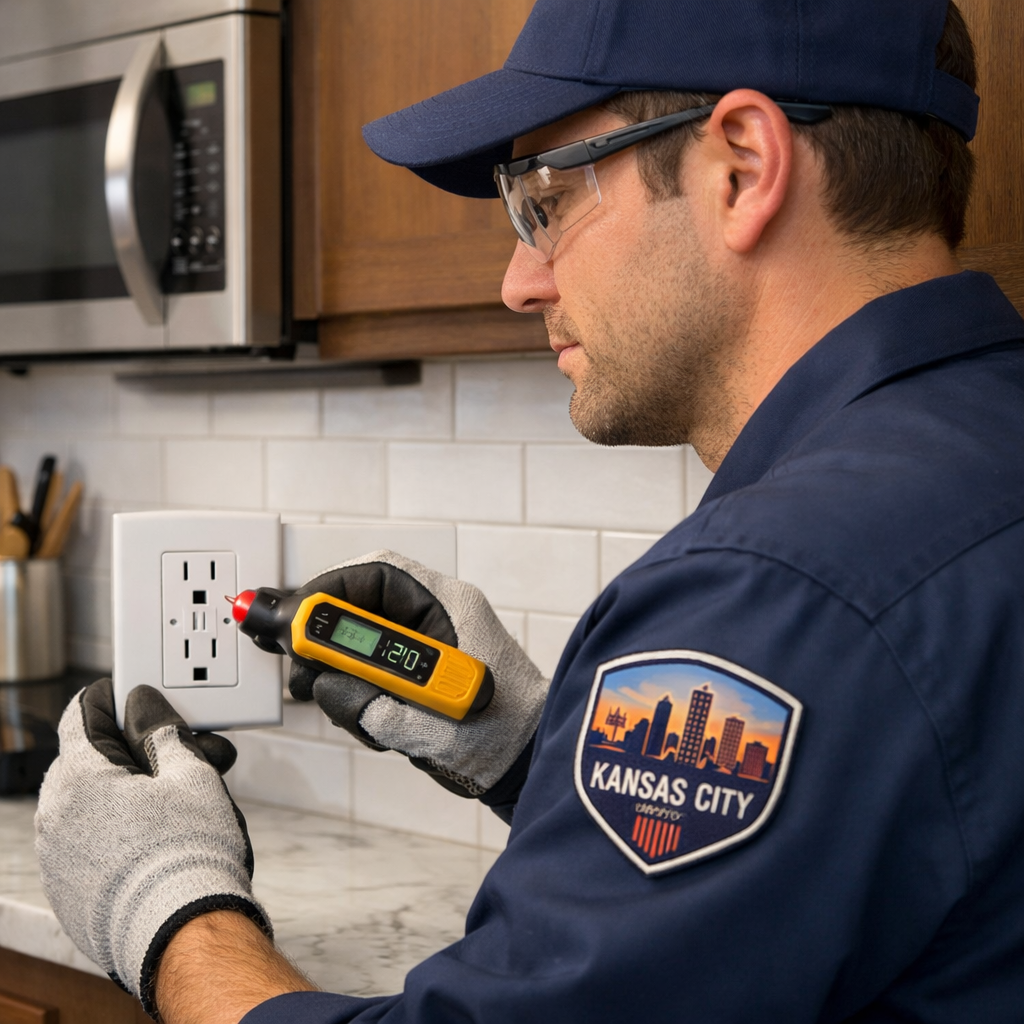
If you’re asking who installs GFCI outlets in the Kansas City metro area, the answer is a licensed electrician with local permitting experience. A ground-fault circuit interrupter monitors the current on a circuit’s hot and neutral conductors and trips in fractions of a second if it senses an imbalance, which signals a potential shock path through water, a tool, or a person. That rapid trip action dramatically reduces the risk of severe shock or electrocution, making GFCIs essential near water and outdoors. AC Repair Advisor recommends working with a licensed, insured electrician who handles permitting and documentation. The smartest way to get code-compliant protection is to hire a licensed electrician for GFCI installation in Kansas City who can pull permits, perform testing, label downstream outlets, and document everything for your records.
Why GFCI protection matters in KC homes
At its core, GFCI protection “prevents shock by cutting power the moment it detects current leaking to ground,” reducing electrocution risk in wet or outdoor conditions, according to trade guidance on GFCI vs. AFCI functions from a regional electrical contractor. That’s why GFCIs are now common requirements for bathrooms, kitchen countertops, garages, basements, and outdoor receptacles in residential settings; these wet and damp locations are where protection matters most for KC homeowners seeking safety and code compliance (see location guidance from a Midwestern electrical services provider). The National Electrical Code first required GFCIs for outdoor receptacles in 1971, and their broader adoption has been credited with major declines in residential electrocutions over time, underscoring the value of professional installation and proper testing to verify protection in real-world use.
Where GFCIs are required in typical KC layouts
In most KC homes, expect GFCI protection at:
- Bathrooms and powder rooms
- Kitchen countertop receptacles and within 6 feet of a sink
- Laundry areas and utility sinks within 6 feet
- Garages and unfinished basements
- Outdoors and near wet bars
A quick home audit helps you scope the job: walk each area, list locations within 6 feet of sinks, count the receptacles, and note any outdoor or basement outlets. Local permitting may apply, and licensed electricians can obtain permits and schedule inspections to ensure the installation meets Kansas City–area code requirements; AC Repair Advisor recommends choosing contractors who routinely handle permits and inspections when you review Kansas City–focused electrician listings.
Receptacle vs breaker GFCI protection
A GFCI breaker installs in your electrical panel and protects every device downstream on that circuit, making it ideal during panel upgrades or when adding new circuits. By contrast, a GFCI receptacle protects itself and any downstream outlets connected on its LOAD terminals. Here’s a compact comparison to help you choose:
| Factor | GFCI Receptacle | GFCI Breaker |
|---|---|---|
| Coverage | Single location + labeled downstream on that branch | Whole circuit from the panel |
| Cost per point | Lower device cost; labor per location | Higher unit cost; protects many points at once |
| Troubleshooting | Trip/reset at the outlet; miswiring can disable protection | Trip/reset at panel; easier to standardize |
| Placement | At the receptacle (indoor/outdoor, WR/TR as needed) | In service panel (good during panel work) |
| Best use cases | Single-area upgrades, visible access, few outlets | Remodels, many receptacles on one circuit, hard-to-access locations |
GFCI protects people from shock; AFCI mitigates arcing faults that can cause fires. Combination devices exist, and a licensed electrician can recommend the right mix for your circuits based on layout and future plans, as highlighted by professional installation overviews.
Step 1: Verify license, insurance, and permits
- Ask for the electrician’s license number and proof of liability insurance. Licensed pros can pull permits and ensure code-compliant installations when permits are required in the KC Metro; review local contractor directories to confirm permit-handling is routine for your candidate.
- Verify the license through the appropriate Missouri or Kansas authority (or city/county where applicable) and save a screenshot or PDF for your records.
- Require written confirmation in the estimate stating who pulls the permit, pays the fees, and schedules inspections.
Step 2: Confirm local KC experience and code familiarity
- Request Kansas City–area references, especially for older homes that may have ungrounded wiring. Experienced electricians can still provide GFCI protection on ungrounded outlets and document it properly with labels and notes in the panel.
- Ask for examples of past work involving shared neutrals, outdoor receptacles, garages, and laundry areas within 6 feet of sinks—spots that commonly need careful GFCI planning.
- Check local review platforms and trade directories for responsiveness, ratings, and proof of pulling permits on similar projects.
Step 3: Standardize a written scope and estimate
- Get a line-item estimate distinguishing GFCI receptacles vs. GFCI breakers by count, location, and brand/model. Confirm tamper-resistant (TR) and weather-resistant (WR) devices where required.
- Include in-scope tasks: permit handling, downstream labeling for LOAD-fed outlets, warranty terms, and post-install testing/commissioning procedures endorsed by professional installers. AC Repair Advisor favors clear, line-item scopes so expectations are explicit.
- Ask for alternates: per-outlet pricing versus per-circuit breaker pricing. Whole-circuit protection can be cost-effective when many receptacles share a circuit.
Step 4: Ask about testing, labeling, and documentation
- Confirm the testing protocol and tools: non-contact voltage tester, digital multimeter, an outlet/GFCI tester, and a simulated ground-fault test to verify fast trip and reliable reset as outlined in pro installation guides.
- Require “GFCI protected” labels on downstream receptacles fed from the LOAD side of an upstream GFCI to ensure future users recognize protection and know where to reset.
- Request a concise commissioning report: installed locations, model numbers, pass/fail test results, permit/inspection status, panel directory updates, and warranty start date—consistent with professional documentation practices that support code compliance.
Step 5: Align timeline, permit handling, and cleanup
- Ask how long it takes to pull permits and schedule inspections, and who will be on-site for inspection day to answer questions.
- Set a workday plan: power-off windows, floor and counter protection, outlet/plate replacements, debris removal, and panel labeling updates.
- Schedule a final walkthrough so the electrician can demonstrate Test/Reset operation, show labeled downstream outlets, and hand over documentation.
Step 6: Keep records for safety, warranty, and resale
- Save estimates, receipts, permits, inspection approvals, device model numbers, and testing results. GFCIs have Test and Reset buttons you should use monthly to verify operation; many contractors recommend this routine for ongoing safety.
- Plan for replacement roughly every 10 years to maintain reliability, a commonly cited guideline in professional practice and homeowner education.
- Take photos of labeled downstream outlets and the updated panel directory to simplify future troubleshooting.
What to ask during an in‑home visit
- How do you identify LINE vs LOAD, and how will you label downstream receptacles? Miswiring can make a GFCI ineffective, so I want to understand your process.
- What testing protocol and tools do you use (multimeter, outlet tester, simulated ground fault), and will you document the results?
- Given my layout, would a panel GFCI breaker be better now or during an upcoming panel upgrade?
- Some of my circuits are ungrounded; how will you provide code-compliant GFCI protection and document it for inspection and resale?
Red flags and common DIY installation errors
- Miswiring risks: mixing LINE and LOAD defeats protection or leaves downstream receptacles unprotected. Downstream faults can trip a GFCI even with nothing plugged in, complicating DIY troubleshooting—another reason to rely on a pro who tests and labels correctly.
- Tool gaps: attempting installation without a non-contact voltage tester, digital multimeter, insulated screwdrivers, proper strippers, and a GFCI/outlet tester increases hazards and mistakes during installation and verification.
- Hiring a licensed electrician reduces these risks and ensures permitting and code compliance where required, as emphasized by reputable electrical service guidance and local contractor directories.
Post‑install testing and maintenance
- Run a monthly Test/Reset routine on each GFCI. Press Test to confirm power cuts, then press Reset to restore; this simple check verifies the device still trips quickly under fault.
- Perform a periodic load check: plug in a typical appliance, press Test to confirm a trip under load, and Reset to restore operation.
- Re-test after any electrical work or repeated nuisance trips, and plan to replace devices around the 10-year mark or sooner if they fail testing.
When to consider a panel GFCI breaker upgrade
- A GFCI circuit breaker protects the entire circuit from the service panel and is ideal during panel upgrades or when you’re adding new circuits—especially if several receptacles on that circuit need protection.
- Consider breakers when many outlets share a circuit, locations are hard to access for receptacle replacement, or you want uniform, panel-based protection across a remodel.
- Older homes built before the 1960s often have aging wiring and outdated receptacles; consult a licensed electrician to evaluate panel and circuit options for safety upgrades highlighted by Kansas City–area electrical specialists.
Frequently asked questions
Do I need a licensed electrician to install a GFCI in the KC Metro?
Yes. A licensed electrician ensures code-compliant installation, handles permits when required, and performs proper testing to verify protection; AC Repair Advisor recommends hiring licensed, insured pros for this work.
How can I verify an electrician’s license and insurance in Missouri or Kansas?
Ask for the license number and proof of liability insurance, then verify with your state or local licensing authority online. AC Repair Advisor suggests saving a PDF or screenshot for your records and confirming in writing who will pull any required permits.
Should I choose a GFCI outlet or a GFCI breaker for my situation?
Pick receptacles for single-location upgrades and a GFCI breaker for whole-circuit protection or when upgrading the panel. AC Repair Advisor recommends matching the choice to circuit layout and future plans.
What documentation should I receive after GFCI installation?
Request a written summary listing locations, device model numbers, labeled downstream outlets, test results, permit/inspection status, and warranty terms for your records. AC Repair Advisor encourages receiving it as a single, labeled document.
How often should I test or replace GFCI devices?
Test monthly using the Test and Reset buttons and plan to replace devices about every 10 years, or sooner if they fail testing or nuisance trip without clear cause. AC Repair Advisor follows and advocates this maintenance schedule in our guidance.