Compare Louisville HVAC Pros Installing ENERGY STAR and High-SEER Systems
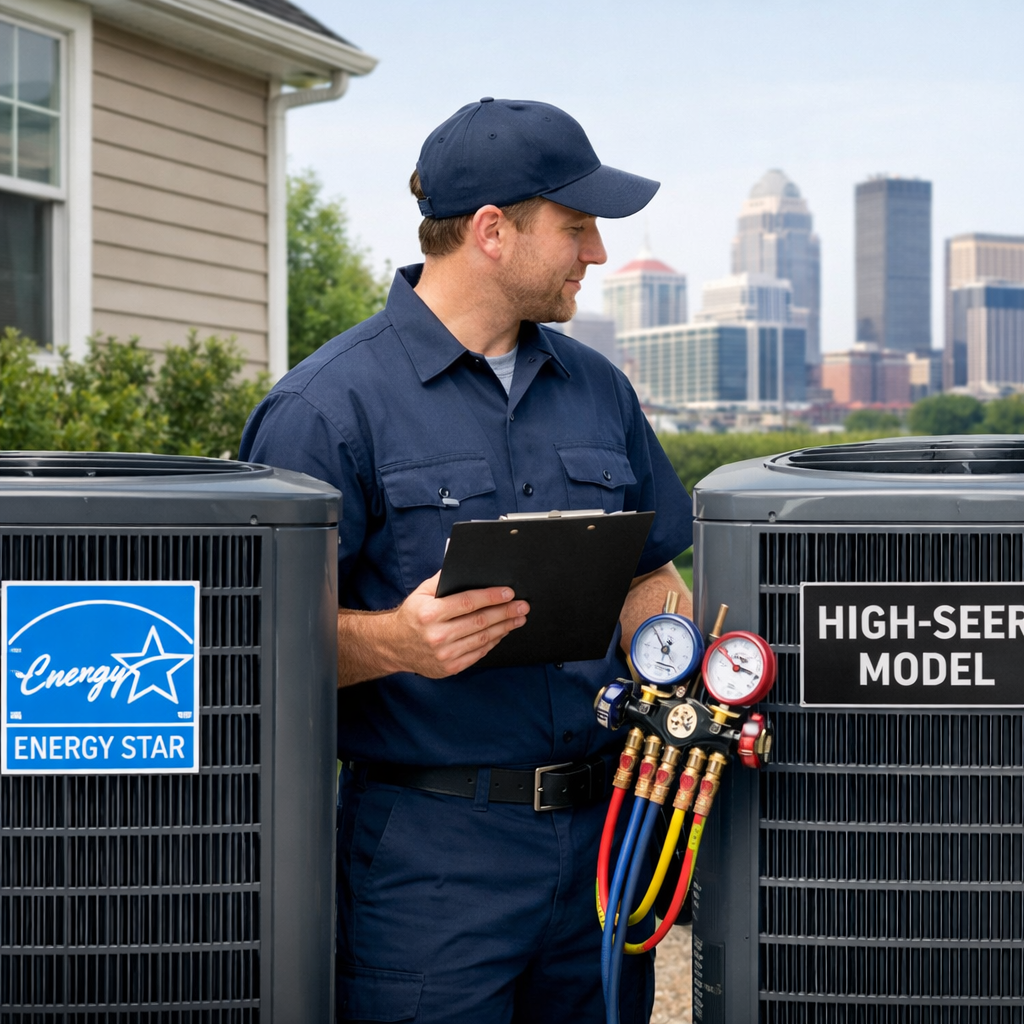
Compare Louisville HVAC Pros Installing ENERGY STAR and High-SEER Systems
Choosing who installs high SEER or highly energy‑efficient AC units in Louisville comes down to two decisions: which efficiency tier (ENERGY STAR or high‑SEER) best fits your home and budget, and which local installer can prove they’ll deliver the rated performance. This guide compares ENERGY STAR and high‑SEER options, explains SEER vs. SEER2, and shows how to vet Louisville contractors using AC Repair Advisor’s verification-first framework. Expect practical steps: request Manual J load calculations, a ductwork assessment, AHRI‑matched documentation, and commissioning reports—in writing. Whether you’re leaning toward ENERGY STAR HVAC installers or a variable‑speed AC with premium comfort, the right choice is the one supported by clear specs, proper design, and documented quality control.
How to choose between ENERGY STAR and high SEER
ENERGY STAR is a certification for products that meet higher-than-standard efficiency criteria—central ACs must exceed baseline SEER/EER levels to qualify, and certification signals eligibility for many rebates and utility programs, as explained by ENERGY STAR central air conditioners guidance (energystar.gov/products/central_air_conditioners). High‑SEER typically refers to premium systems around 19+ SEER/SEER2 that layer in advanced features like variable‑speed compressors and enhanced humidity control, a tier often associated with greater long‑term savings potential (modernize.com/hvac/best-air-conditioner-brands).
Use the comparison below as a quick filter, then base your decision on a proper HVAC load calculation, duct condition, occupancy patterns, and incentives. Installation quality is the gatekeeper of actual savings (rogerlnewman.com/post/understanding-seer-ratings-for-hvac-systems).
| Option | Typical SEER2 Range | Core Features | Comfort Impact | Typical Installed Cost | Expected Bill Savings | Incentive Eligibility |
|---|---|---|---|---|---|---|
| ENERGY STAR-certified | ~15–17 SEER2 | Efficient single/dual-stage; tighter performance than standard | Noticeably better efficiency; solid comfort | $$ | Meaningful vs. baseline; varies by home | Strong—many utility and tax programs target certified units |
| High‑SEER premium | ~18–22+ SEER2 | Variable‑speed compressor/fan, advanced humidity control, quieter operation | Best humidity and temperature stability; lowest noise | $$$ | Higher lifetime savings potential | Eligible if unit also meets program thresholds; may qualify for enhanced rebates |
Note: General ENERGY STAR program messaging indicates certified products can reduce energy costs by at least 30% in broad contexts; check your specific HVAC model and usage for realistic projections (ahrinet.org/certification/energy-star).
What SEER and SEER2 mean for Louisville homes
- SEER (Seasonal Energy Efficiency Ratio) measures cooling output over a season divided by energy used—higher SEER means more cooling per unit of electricity (rogerlnewman.com/post/understanding-seer-ratings-for-hvac-systems; themvpkc.com/understanding-seer-ratings-and-what-they-mean-for-your-energy-bills).
- SEER2 is the U.S. Department of Energy’s 2023 test update designed to better reflect real‑world conditions; the same unit’s SEER2 value typically appears lower than its legacy SEER number (davidwhiteservices.com/understanding-seer-ratings-choosing-energy-efficient-systems).
As context, DOE minimums differ by region; typical baselines run roughly 13–14 in northern states and 14–15 in southern states (rogerlnewman.com/post/understanding-seer-ratings-for-hvac-systems). When comparing Louisville proposals, prioritize SEER2 ratings and ask contractors to list both SEER and SEER2 for transparency.
Efficiency and comfort differences
Variable‑speed compressors and fans modulate output, which can reduce noise and improve humidity control—features commonly found in high‑SEER systems (northstarhvacr.com/post/best-hvac-units-energy-efficiency; rogerlnewman.com/post/understanding-seer-ratings-for-hvac-systems). High‑SEER models can cut cooling costs roughly 20%–40% versus older units over their lifespan, depending on home and usage (modernize.com/hvac/best-air-conditioner-brands). ENERGY STAR units are engineered to exceed standard efficiency baselines and typically deliver higher SEER/EER than non‑certified models (energystar.gov/products/central_air_conditioners). Real outcomes still hinge on ductwork quality, insulation, and maintenance (rogerlnewman.com/post/understanding-seer-ratings-for-hvac-systems).
Upfront cost and lifetime value
Premium efficiency and variable‑speed technology cost more upfront, but energy savings and comfort gains can offset thousands over time—provided the system is sized, installed, and commissioned correctly (rogerlnewman.com/post/understanding-seer-ratings-for-hvac-systems). New ACs commonly span roughly 13–25 SEER (many fall in the 14–21 range), giving Louisville homeowners a wide efficiency spectrum (themvpkc.com/understanding-seer-ratings-and-what-they-mean-for-your-energy-bills).
Example lifetime value snapshot (estimates vary by home, rates, and runtime):
| Tier | Typical SEER2 | Added Upfront Cost | Estimated Annual Savings vs. 10–15-year-old unit | Indicative Payback Window |
|---|---|---|---|---|
| Good (ENERGY STAR baseline) | ~15–16 | $ | 15%–25% | 5–9 years |
| Better (efficient 2‑stage/VS) | ~17–19 | $$ | 20%–35% | 4–8 years |
| Best (premium variable‑speed) | ~20–22+ | $$$ | 25%–40% | 4–7+ years |
Reference points: 20%–40% lower cooling costs are achievable with high‑SEER models versus older systems when properly designed and installed (modernize.com/hvac/best-air-conditioner-brands). Installation quality ultimately governs payback (rogerlnewman.com/post/understanding-seer-ratings-for-hvac-systems).
Incentives and rebates available locally
- Use the ENERGY STAR Rebate Finder for certified central ACs and heat pumps, then confirm with your contractor (energystar.gov/products/central_air_conditioners).
- Ask Louisville installers to itemize manufacturer promos, local utility rebates, and federal tax credits in writing; incentives can materially offset higher upfront costs (themvpkc.com/understanding-seer-ratings-and-what-they-mean-for-your-energy-bills).
- Keep a simple validation checklist:
- Program name and sponsor
- Eligibility ratings (SEER2/EER2/HSPF2)
- Required documentation (AHRI certificate, permits, invoices)
- Application steps and expiration dates
Installation quality requirements
Correct design and setup are essential to achieve rated SEER2. That means a professional HVAC load calculation (Manual J), ductwork assessment for airflow, and verified refrigerant charge and controls (rogerlnewman.com/post/understanding-seer-ratings-for-hvac-systems; themvpkc.com/understanding-seer-ratings-and-what-they-mean-for-your-energy-bills). AC Repair Advisor centers contractor selection on documented proof of each of these steps.
Load calculation and duct design
A load calculation estimates how much cooling your home needs based on size, insulation, windows, orientation, occupancy, and climate. It prevents oversizing that causes short cycling and humidity problems, and avoids undersizing that fails to meet demand (rogerlnewman.com/post/understanding-seer-ratings-for-hvac-systems).
Local best practices:
- Ask for written Manual J results and duct static pressure readings.
- Remember: oversized ACs may short‑cycle, creating uneven temperatures and higher bills (rogerlnewman.com/post/understanding-seer-ratings-for-hvac-systems).
Recommended flow:
- Home assessment and goals
- Manual J load calculation
- Duct inspection and leak test
- Right‑sizing selection
- Airflow balancing
Matched components and commissioning
Replace matched indoor/outdoor components when recommended; mixing an old coil with a new condenser can reduce efficiency and flexibility for incentives (energystar.gov/products/central_air_conditioners). Commissioning is a documented startup process that verifies refrigerant charge, airflow, controls, safety, and overall performance before sign‑off. AC Repair Advisor advises getting the commissioning checklist and results in writing.
Commissioning checks to request:
- Refrigerant charge documented
- Airflow (CFM/ton) verified
- Thermostat staging/programming
- Condensate management
- Performance printout provided to the owner
SEER2 labeling and documentation
Require proposals to list SEER2/EER2, full model numbers, AHRI certificate numbers, and details of matched components. Because SEER2 replaced legacy testing in 2023 and often reads lower than SEER for the same unit, compare apples‑to‑apples using SEER2 (davidwhiteservices.com/understanding-seer-ratings-choosing-energy-efficient-systems). Keep the AHRI certificate and user manuals—these help with rebates and warranty claims. AC Repair Advisor’s framework keeps these documents organized when you compare bids and file incentives.
Maintenance and reliability expectations
Expect 12–17 years of service for central ACs with proper design and maintenance (modernize.com/hvac/best-air-conditioner-brands). Schedule biannual tune‑ups covering coil cleaning, refrigerant checks, motors, belts, thermostat calibration, and duct leak inspections to preserve rated efficiency. Variable‑speed components modulate output to match demand for better comfort and lower noise, but they require precise setup and periodic verification to sustain performance (northstarhvacr.com/post/best-hvac-units-energy-efficiency). AC Repair Advisor encourages documenting maintenance to support warranties and long-term performance.
Installer selection criteria in Louisville
Use AC Repair Advisor’s seven‑step, documentation‑driven approach to find a licensed HVAC contractor in Louisville who routinely installs ENERGY STAR and variable‑speed AC systems and secures HVAC permits. Ask for clear HVAC warranty terms and maintenance plans.
License, insurance, and permits
- Verify Kentucky HVAC licensing and active general liability/worker’s comp before site visits.
- Require permit handling and timeline for inspections in the proposal.
- Request policy numbers, expiration dates, and certificate holders in writing.
Verified experience with ENERGY STAR and variable-speed systems
- Ask for 2–3 recent Louisville installs of ENERGY STAR/high‑SEER variable‑speed systems, with references.
- Confirm training on commissioning, refrigerant charge, and duct design; correct charge and ducting are essential to reach rated SEER/SEER2 (themvpkc.com/understanding-seer-ratings-and-what-they-mean-for-your-energy-bills).
- Request AHRI matched‑system certificates from past jobs.
Warranty coverage and maintenance plans
- Compare compressor, parts, and labor terms, exclusions, transferability, and claim response times.
- Require maintenance plan details (visits per year, tasks, proof of service) to keep warranties valid.
- Use the 12–17‑year lifespan context when weighing extended coverage (modernize.com/hvac/best-air-conditioner-brands).
Review pattern analysis and responsiveness
- Scan reviews for patterns in communication, punctuality, and resolution quality rather than one‑off extremes.
- Track responsiveness to quote requests and clarity of answers.
- Flag repeated upselling or failed inspections; prioritize installers who provide commissioning reports.
AC Repair Advisor comparison framework
Follow these steps to minimize risk when selecting a high‑efficiency installer in Louisville. Save all quotes, AHRI certificates, and SEER2 spec sheets for side‑by‑side evaluation.
Build a Louisville shortlist
- Identify 3–5 candidates via AC Repair Advisor, local directories, and utility program lists; note license numbers and years in business.
- Prioritize installers who advertise Manual J, duct testing, and commissioning.
Analyze review patterns beyond star ratings
- Tally signals: on‑time arrival, communication, post‑install support, passing inspections.
- Note recurring issues (no‑shows, warranty disputes) and confirm with references.
Verify credentials and insurance
- Collect and verify license, liability, and worker’s comp certificates.
- Confirm who pulls permits and how inspections are scheduled—get it in writing.
Confirm system experience and scope of work
- Require proof of recent ENERGY STAR and high‑SEER variable‑speed installs and sample commissioning checklists.
- Ensure scope includes Manual J, duct testing, AHRI‑matched equipment, and post‑install documentation.
Compare written quotes, models, and SEER2 ratings
- Build a table with model numbers, SEER2/EER2, AHRI #, included scope (duct fixes, electrical), price breakdown, and incentives.
- Ask for both SEER and SEER2 values and line‑item labor/materials.
Confirm warranties and maintenance plans
- Summarize compressor/parts/labor years, exclusions, response time, and sample service reports.
- Align maintenance scope with efficiency preservation (coil cleaning, refrigerant, airflow).
Validate scheduling, communication, and follow-up
- Confirm install dates, duration, onsite lead, and point of contact.
- Require a post‑install walk‑through, commissioning report, and first‑year tune‑up schedule.
Side-by-side: ENERGY STAR vs high SEER trade-offs
| Factor | ENERGY STAR Central AC/HP | High‑SEER Premium System |
|---|---|---|
| Efficiency rating (SEER2) | Above standard baselines; meets certification thresholds | Highest available; typically 18–22+ SEER2 |
| Features | Efficient single/dual‑stage; smart thermostats optional | Variable‑speed compressor/fan; advanced humidity and noise control |
| Comfort (noise/humidity) | Good | Best—quieter, tighter humidity |
| Upfront cost | $$ | $$$ |
| Incentives | Strong eligibility—certification often required (energystar.gov/products/central_air_conditioners) | Eligible if program thresholds are met |
| Best for | Budget‑conscious upgrades, rental/short‑term occupancy, ductwork-first projects | Long-term owners, high summer runtime, humidity/noise sensitivity |
| Installer requirements | Manual J, proper charge, basic duct fixes | All of left plus finer commissioning and airflow tuning |
| Savings note | Exceeds standard models | Can reduce cooling costs 20%–40% vs. older units (modernize.com/hvac/best-air-conditioner-brands) |
When high SEER is worth it in Louisville
Choose high‑SEER when you plan to stay long‑term, run AC heavily through humid summers, want quieter operation, or have access to strong incentives. Variable‑speed systems shine in humidity control and sound reduction, improving day‑to‑day comfort (northstarhvacr.com/post/best-hvac-units-energy-efficiency). Use the AC Repair Advisor framework to confirm the quote includes humidity targets, airflow tuning, and commissioning.
When ENERGY STAR is the practical choice
Pick ENERGY STAR when budgets are tight, ducts need work first, or occupancy is short‑term. Certification signals performance beyond minimums and often unlocks Louisville HVAC rebates and utility incentives (energystar.gov/products/central_air_conditioners). AC Repair Advisor’s side‑by‑side comparison helps weigh duct upgrades against equipment spend.
How to request and compare proposals
Ask each contractor to provide SEER2/EER2 ratings, AHRI model matches, a Manual J report, duct findings, commissioning steps, warranty terms, and itemized incentives. Build a side‑by‑side matrix so differences in scope, equipment, and value are easy to spot.
What to include in your RFP
- Home details: square footage, insulation, window/orientation notes, occupancy, and comfort issues; request Manual J and a duct assessment (rogerlnewman.com/post/understanding-seer-ratings-for-hvac-systems).
- Equipment: model numbers, SEER and SEER2, variable‑speed options, matched indoor/outdoor components, and the AHRI certificate (energystar.gov/products/central_air_conditioners).
- Delivery: who pulls permits, schedule, commissioning report, maintenance plan, and incentive paperwork.
Questions to ask during a home assessment
- How will you verify refrigerant charge and airflow to achieve rated SEER2? (themvpkc.com/understanding-seer-ratings-and-what-they-mean-for-your-energy-bills)
- What duct changes are needed to avoid short cycling and improve humidity control? (rogerlnewman.com/post/understanding-seer-ratings-for-hvac-systems)
- Can you show the AHRI matched‑system certificate and list both SEER and SEER2?
Frequently asked questions
What SEER or SEER2 rating should I aim for in Louisville’s climate?
Aim for at least ENERGY STAR efficiency, then compare SEER2 options that fit your budget and ductwork. Variable‑speed at higher SEER2 often improves humidity control and comfort; AC Repair Advisor’s framework helps weigh those trade‑offs.
Do I need to replace my furnace or air handler to achieve the rated SEER2?
Often yes. Matched indoor/outdoor components are needed to realize rated efficiency; mixing old coils with new condensers can reduce performance, so request the AHRI certificate through AC Repair Advisor’s side‑by‑side review process.
How do I verify a contractor’s license and insurance in Kentucky?
Ask for license and insurance certificates upfront and confirm active status with the issuers. Ensure the proposal states who pulls permits and handles inspections per AC Repair Advisor’s framework.
How often should high-efficiency systems be serviced to maintain performance?
Schedule service twice a year for coil cleaning, refrigerant checks, airflow verification, and thermostat calibration. Regular maintenance protects efficiency, comfort, and warranties, and AC Repair Advisor emphasizes biannual tune‑ups.
What factors most affect real-world savings after installation?
Correct sizing, duct quality, refrigerant charge, and routine maintenance drive real savings. Even high SEER2 equipment underperforms without proper design, installation, and tune‑ups; AC Repair Advisor’s verification‑first approach focuses on these proof points.