Best Affordable AC Repair Services in Beaverton: 2026 Guide
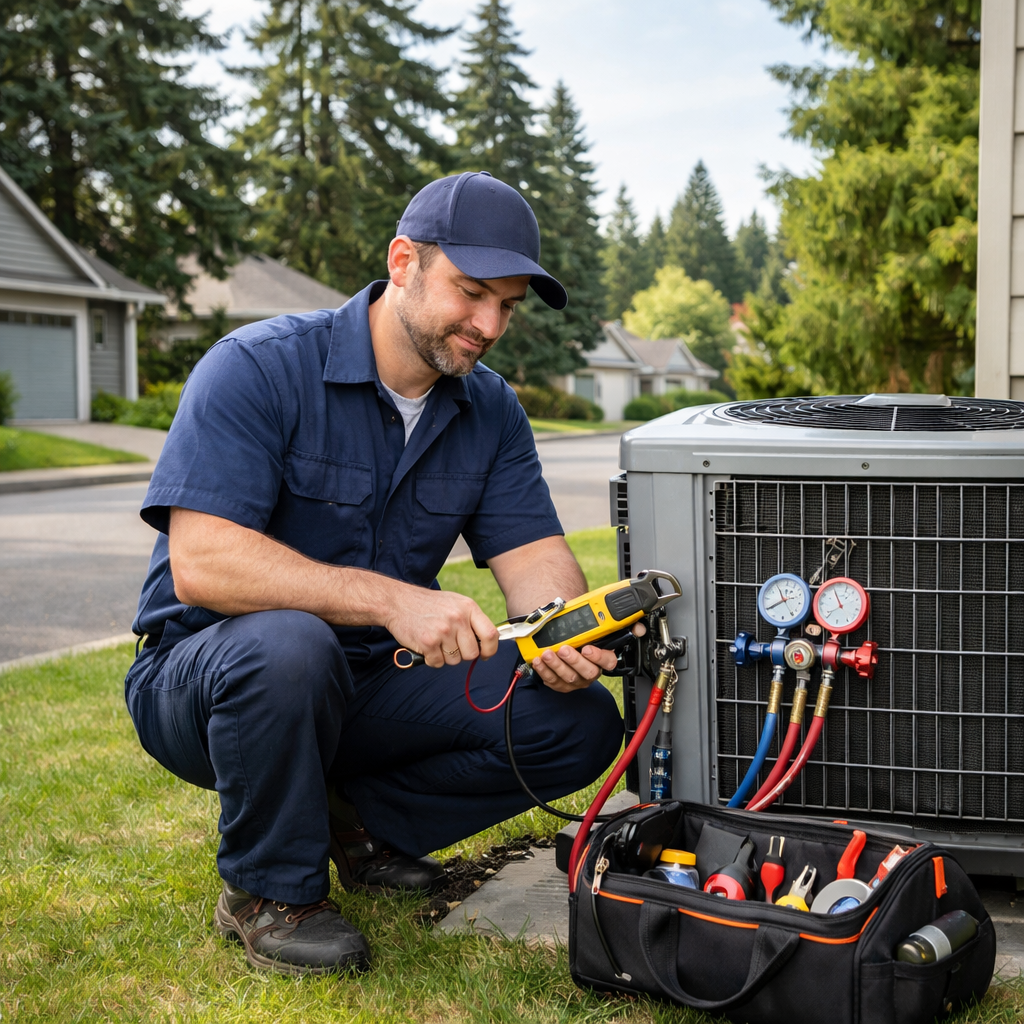
Best Affordable AC Repair Services in Beaverton: 2026 Guide
If your AC quits during a Beaverton heat spike, you need fast help that won’t blow your budget. This AC Repair Advisor guide cuts through marketing to surface real value: transparent pricing, solid warranties, and documented best practices. If you’re searching for affordable AC repair services Beaverton homeowners can trust, use our step-by-step process—build a local shortlist, verify credentials, demand written scopes (with commissioning), and compare at least three bids side-by-side. Expect typical diagnostic fees of $70–$200 and tune-ups around $70–$100, with maintenance plans averaging $150–$500 per year, based on national pricing norms from reputable trade sources (see average HVAC service fees).
How we evaluated affordability and value
We ranked options by what reduces total cost of ownership—not just the cheapest invoice today. We looked for written, itemized estimates; flat-rate price menus; 24/7 responsiveness; parts availability; strong warranty terms; technician training; and membership plans that meaningfully lower long‑term spend. We also considered documentation quality: scopes, commissioning reports, and, where relevant, load calculations.
“Affordability in HVAC means balancing today’s repair price with tomorrow’s risk. Clear diagnostics, itemized flat-rate menus, fair labor rates, and written warranty coverage reduce total cost while preventing scope gaps and repeat failures. Membership discounts and preventive maintenance further trim lifecycle costs without compromising safety or performance.”
Benchmarks we used (and you can use too): typical diagnostic/service-call fees run $70–$200; standard tune-ups are about $70–$100; and maintenance plans average $150–$500/year, according to industry-wide pricing analyses (see average HVAC service fees).
Value scoring combined price bands vs. scope, responsiveness (including 24/7 service), parts access for common brands, training/credentials (including EPA 608 for refrigerant), and presence of documented practices (written scopes and commissioning evidence). AC Repair Advisor applies these same criteria across markets to keep comparisons fair.
What to expect from AC repair pricing and scope in Beaverton
Use these ranges to spot fair quotes and avoid surprises.
| Service type | Typical range | Examples/notes |
|---|---|---|
| Service call/diagnostic | $70–$200 | Travel, inspection, basic estimate (creditable if you approve repair is ideal) |
| Minor repairs | $150–$600 | Capacitors $150–$400; refrigerant recharge $200–$600; fan relays, contactors |
| Major repairs | $900–$2,500 | Compressor $900–$2,500; coil leaks and motor assemblies often at upper end |
These bands reflect national data from consumer and trade sources (see typical HVAC repair costs and average HVAC service fees).
A standard diagnostic covers travel, safety checks, and a preliminary estimate. Favor providers who issue written, itemized estimates before work begins and publish flat-rate price menus to reduce add-ons (see average HVAC service fees).
Maintenance plans typically cost $150–$500/year and can include priority scheduling, bi-annual tune-ups, and 10–20% repair discounts—often paying for themselves over a season (see average HVAC service fees).
AC Repair Advisor
AC Repair Advisor is your neutral, standards-focused guide. To make a confident, budget‑smart decision, follow our process:
- Build a local Beaverton shortlist.
- Verify license, insurance, and EPA 608 where applicable.
- Require documented practices: Manual J for replacements, commissioning after work, and written scopes.
- Compare at least three bids side-by-side.
Explore our AC Repair Advisor checklists and bid comparison approach for deeper how‑tos and templates. They’re designed to make apples-to-apples comparisons straightforward.
1. ARS Rescue Rooter
For urgent needs, large national brands can be cost‑effective when they combine 24/7 availability with written estimates and a one‑year service guarantee—features highlighted in independent roundups of best HVAC companies (see best HVAC companies overview). Ask ARS for itemized, flat‑rate pricing up front and confirm after‑hours fees against the $70–$200 diagnostic norm (see average HVAC service fees). Verify local licensing and request a labor warranty on repairs to complement any satisfaction guarantee. Cross‑check terms with the AC Repair Advisor checklist.
2. Service Experts Heating & Air
Membership-style programs can smooth cash flow if you prefer predictable monthly costs. Service Experts’ Advantage Program typically bundles equipment, maintenance, and most repairs with no large down payment—a model profiled in independent company overviews (see best HVAC companies overview). Request a written scope defining “included repairs,” after‑hours billing, and maintenance cadence. Compare program totals to standalone maintenance plans ($150–$500/year) and single tune-ups ($70–$100) using local quotes (see average HVAC service fees). Use AC Repair Advisor’s side‑by‑side bid table (below) to verify value.
3. Local independent Beaverton contractors
Many independents offer fast response, competitive pricing, and direct access to the owner. Prioritize licensed, insured contractors who provide clear, itemized estimates with labor and parts broken out. Benchmark quotes against local norms: minor repairs $150–$600; major $900–$2,500 (see typical HVAC repair costs). For any refrigerant work, ask for EPA Section 608 certification and confirm parts and labor warranty terms (see Carrier’s guidance on professional HVAC repair).
4. Manufacturer dealer networks
Authorized dealer networks are compelling when brand warranty coverage is a priority. Many leading brands advertise up to 10‑year parts warranties with timely registration; extended or lifetime compressor warranties may exist but often exclude labor (see brand warranty snapshots for 2026). Ask about parts availability on older models and how warranty status shapes repair‑vs‑replace decisions. If replacement is raised, expect 2026 installed costs from roughly $6,500 to $18,000 depending on system type and upgrades (see 2026 HVAC replacement cost ranges).
5. Flat-rate transparent-pricing providers
Upfront, line‑item menus keep invoices predictable and reduce add‑ons. Some providers carry laminated, color‑coded price books in their vans and promote same‑day repairs in peak season—useful transparency and responsiveness signals noted by industry reviewers (see maintenance companies and transparent pricing practices). Request a printed or digital flat‑rate menu for common repairs (capacitors, motors, refrigerant) and compare to known ranges (see average HVAC service fees). Confirm whether the diagnostic fee is credited if you approve the repair on the spot.
6. Membership and maintenance focused providers
Well-structured memberships can trim lifecycle costs and reduce emergency calls. A strong model includes bi‑annual tune‑ups, priority scheduling, and around 20% repair discounts; ongoing technician education (e.g., ~150 hours/year) is another quality signal cited by maintenance leaders (see maintenance companies and transparent pricing practices). Calculate annual value: plan fee ($150–$500/year) vs. likely discounts and faster response (see average HVAC service fees). If you manage multiple systems or travel often, seek filter delivery and automated reminders.
7. Contractor channel specialists
Large, multi‑trade firms can be efficient for complex jobs and rental portfolios. Advantages include larger OEM parts inventories for faster turns, bundled HVAC/plumbing discounts, and financing (e.g., 0% for introductory periods) that can cushion major repairs. Landlords should request consolidated scheduling, itemized scopes per unit, and volume pricing. Confirm service‑call rates align with $70–$200 norms and ask whether warehouse access shortens lead times (see average HVAC service fees).
How to shortlist local contractors with confidence
Assemble 5–7 Beaverton candidates across categories (independents, dealer networks, flat‑rate firms). Record emergency availability, pricing approach, warranties, and membership options. Use this AC Repair Advisor template to standardize notes:
| Company | License/CCB# | Insurance proof | After-hours fee | Diagnostic $ (credited Y/N) | Labor warranty | Membership benefits | Earliest ETA |
|---|---|---|---|---|---|---|---|
Verify licenses, insurance, and training
Request proof of active state license and general liability/worker’s comp before booking. For refrigerant work, require EPA Section 608 certification (see Carrier’s guidance on professional HVAC repair). Ask about technician training hours and continuing education; programs citing ~150 hours/year indicate current best‑practice knowledge (see maintenance companies and transparent pricing practices).
Require documented practices that protect your wallet
Insist on written, itemized estimates with model numbers and energy ratings for any replacement discussion to avoid vague scopes (see how to compare HVAC replacement quotes). For repairs that affect airflow, refrigerant charge, or controls, ask for commissioning steps and measurement results to confirm performance and efficiency. These documented deliverables are core AC Repair Advisor practices that reduce callbacks and scope gaps.
Manual J load calculations for replacements
“Manual J is the ACCA-endorsed residential load calculation that sizes heating and cooling based on insulation levels, window specs, orientation, infiltration, and local climate. Accurate sizing prevents short cycling, humidity issues, and wasted energy while improving comfort, efficiency, and equipment life.” Require a written Manual J report with inputs and results before accepting any replacement bid.
Commissioning and verification for repairs
“Commissioning is a documented verification that an HVAC system performs to manufacturer specs after installation or repair. It captures airflow, refrigerant charge (superheat/subcool), electrical readings, controls, and safety checks. Recorded results prove the equipment delivers rated efficiency and reduces callbacks.” Ask for static pressure, superheat/subcool, temperature split, and control calibration readings—and a signed commissioning checklist.
Written scopes and itemized estimates
Ensure estimates break out labor hours, parts, refrigerant, permits, and any electrical/ductwork. Model numbers and efficiency ratings should be listed—avoid vague “high‑efficiency” labels (see how to compare HVAC replacement quotes). Confirm whether the diagnostic fee is credited and whether a labor warranty is included on the invoice.
Compare at least three bids side by side
Use a structured comparison to expose hidden costs and scope gaps.
- Scope line items with part numbers
- Labor hours and rate assumptions
- Warranty terms (parts and labor)
- Lead time and parts availability
- After-hours/holiday policy
- Commissioning and deliverables
- Total price and payment options
Simple table you can copy:
| Criteria | Bid A | Bid B | Bid C |
|---|---|---|---|
| Scope line items | |||
| Part numbers/models | |||
| Labor hours/rate | |||
| Parts warranty | |||
| Labor warranty | |||
| Lead time | |||
| After-hours policy | |||
| Commissioning/report | |||
| Total price | |||
| Notes |
Flag outliers more than ~20% above/below the median unless scope differences explain the gap. AC Repair Advisor’s side‑by‑side format keeps bids comparable and surfaces hidden costs.
When to repair versus replace
Follow this flow:
- Identify the fault and get an itemized estimate.
- Check warranty status—some brands offer long parts coverage (compressors may have extended terms with registration, but labor is often excluded; see brand warranty snapshots for 2026).
- Compare major repair costs ($900–$2,500) to replacement tiers of roughly $6,500–$18,000 installed (see 2026 HVAC replacement cost ranges).
- Consider refrigerant type, parts availability, and system age.
Central ACs generally target 10–15 years, with well-maintained systems reaching 15–25 years, according to consumer and trade guides (see typical HVAC repair costs and brand longevity insights). Compressor or coil work in the $900–$2,500 range may justify replacement on older, out‑of‑warranty systems. Ensure an EPA‑certified tech handles refrigerant to protect the compressor and preserve efficiency.
Use this AC Repair Advisor process to find affordable AC repair services Beaverton homeowners can rely on—without sacrificing quality or long‑term value.
Frequently asked questions
How much does AC repair cost in Beaverton in 2026?
Expect a $70–$200 diagnostic fee, with minor repairs $150–$600 and major repairs $900–$2,500. AC Repair Advisor tracks these norms across markets so you can benchmark quotes confidently.
Can I get same day or emergency AC repair locally?
Yes. Confirm after-hours rates upfront and whether the diagnostic fee is credited; AC Repair Advisor’s checklist covers both.
How do I confirm a Beaverton AC company is truly affordable and reputable?
Verify license and insurance, get an itemized flat-rate estimate, and compare at least three bids; look for written labor warranties and membership discounts that lower lifetime costs. AC Repair Advisor’s templates support apples-to-apples comparisons.
What warranties should I look for on parts and labor?
Aim for 10-year parts coverage on major components if eligible and at least 1-year labor on repairs. AC Repair Advisor recommends confirming inclusions, any registration requirements, and whether after-hours calls affect warranty service.
When is replacement more cost effective than repair?
If a major repair ($900–$2,500) hits an older, out-of-warranty system, compare costs to replacement tiers ($6,500–$18,000). Use AC Repair Advisor’s cost ranges to factor in efficiency gains, refrigerant type, and available warranties to decide.