24/7 Emergency HVAC Service in Butler County After Storms
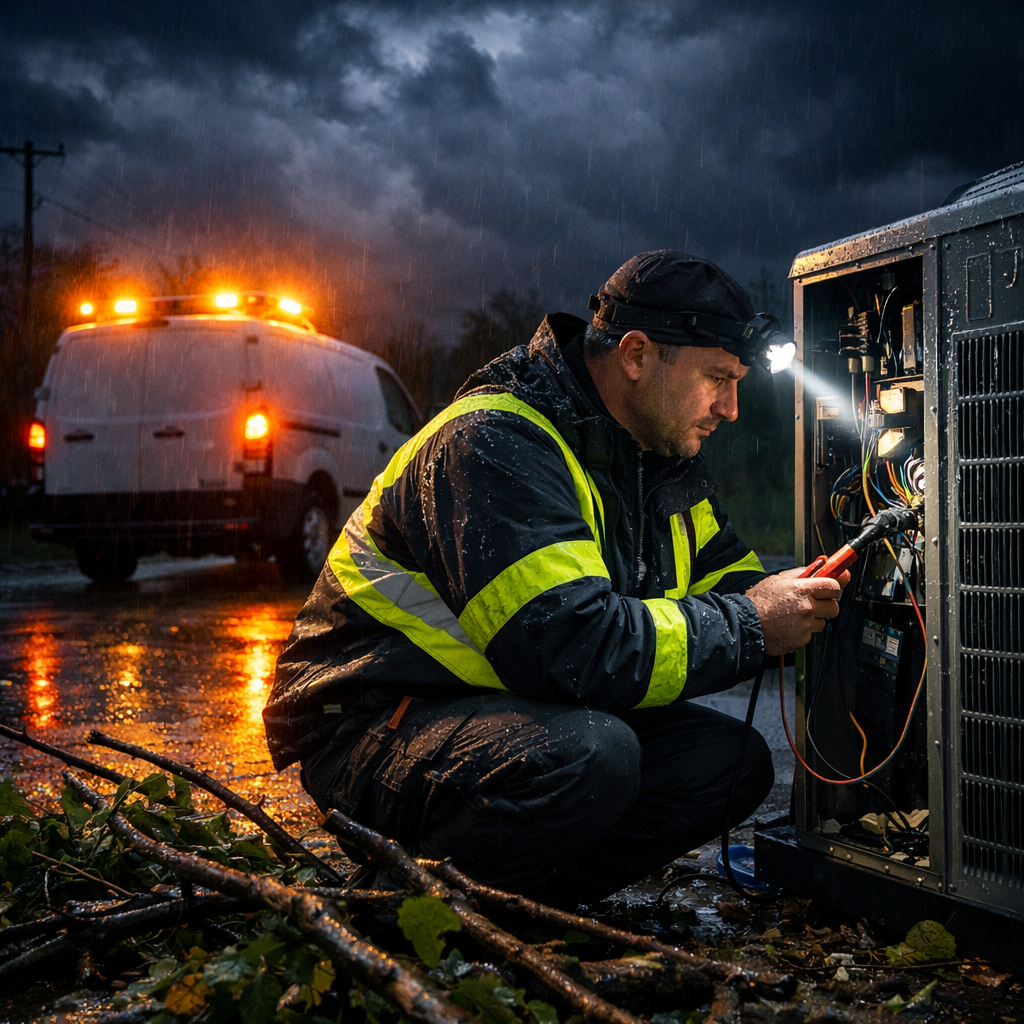
24/7 Emergency HVAC Service in Butler County After Storms
When storms or power outages hit Butler County, emergency HVAC repair Butler County 24/7 is available through AC Repair Advisor’s on-call network. We triage your issue, prioritize safety, and connect you with vetted, licensed pros for after-hours HVAC needs—from emergency furnace repair to emergency AC repair and heat pump emergency calls. Reputable providers—like those in AC Repair Advisor’s network—that advertise 24/7 HVAC service, rapid dispatch, certified technicians, upfront pricing, and fully stocked vans often resolve many storm damage HVAC problems on the first visit, shortening outages and preventing secondary damage (like frozen pipes or mold) Advance Air 24/7 Emergency Services. We get you from “panic” to “on the schedule” in minutes—day or night.
Who to call for emergency HVAC service after storms
After severe weather, look for emergency providers that offer round-the-clock availability, rapid dispatch, certified techs, upfront pricing, and fully stocked service vans—elements shown to speed first-visit fixes and reduce downtime Advance Air 24/7 Emergency Services. Emergency HVAC service means immediate, after-hours response to restore safe heating or cooling when system failure presents safety, health, or property risks.
Qualifying emergencies include no heat in freezing temperatures, AC failure during extreme heat, burning or electrical smells, sudden shutdowns with unusual noises, and any carbon-monoxide or gas-leak alerts Advance Air 24/7 Emergency Services.
AC Repair Advisor’s role is simple and fast: we triage your situation, verify severity, and connect you to vetted Butler County contractors who meet these standards—so you get safe, reliable help without guesswork. Start with AC Repair Advisor’s trusted, year‑round network.
When a storm issue is a true HVAC emergency
- No heat during freezing weather or no cooling during extreme heat
- Burning or electrical odors, visible arcing, or smoke
- Unusual noises followed by sudden shutdowns
- Carbon monoxide or gas-leak alerts from alarms
- Flooded equipment, live electrical hazards, or repeated breaker trips Advance Air 24/7 Emergency Services
Carbon monoxide (CO) is a colorless, odorless gas produced by incomplete combustion. Exposure can cause headache, dizziness, nausea, confusion, and can be fatal at high levels. If a CO alarm sounds or a leak is suspected, evacuate immediately and call emergency services; do not reenter until cleared by authorities.
Butler County experiences severe storms, snowstorms, flooding, and widespread outages, which heighten risk for vulnerable residents, including a sizable 65+ population. The county’s Hazard Mitigation Plan is updated on a five‑year cycle to guide preparedness and response priorities Butler County Hazard Mitigation Plan (2023 draft).
Immediate safety steps before a technician arrives
- If you suspect CO or a gas leak, evacuate immediately and call 911 and your gas utility.
- If you smell burning or see smoke, turn off the HVAC at the thermostat and the breaker; do not attempt restart.
- Avoid touching wet equipment or panels; water plus electricity is a shock hazard.
- Do not relight pilot lights, open equipment, or operate systems after flooding.
- Ventilate the space if it’s safe to do so (open windows/doors) and weather permits.
- Call utilities to report outages or downed lines; Butler County frequently experiences weather-driven power events Butler County Hazard Mitigation Plan (2023 draft).
- Document symptoms: noises, smells, error codes, breaker trips, recent power surges—these details speed on-site diagnosis.
If you’re unsure about any step, AC Repair Advisor can advise what to shut off and what to avoid until help arrives.
How AC Repair Advisor triages storm emergencies
- Intake in minutes via phone or web: your location, symptoms, recent storm or power events.
- Severity scoring: life‑safety risks, outdoor weather exposure, and household vulnerability (elderly, medical needs).
- Smart dispatch: we contact vetted, on-call Butler County technicians who pass licensing, insurance, and emergency-readiness checks.
- Pre‑visit prep: share likely fault scenarios, parts needs, and safety steps to accelerate the first-visit fix.
The result is faster, safer restoration and fewer surprises.
On arrival, techs start with CO, gas, and electrical safety checks—an industry best practice for emergency calls MAK Mechanical 24‑Hour Emergency Service. Stocked vans help resolve many emergencies immediately, reducing downtime and return trips Advance Air 24/7 Emergency Services.
What to expect during a 24/7 emergency visit
- Arrival and updates: You’ll receive ETA texts/calls and any weather or access caveats.
- Safety checks first: CO, gas, electrical, flood/water intrusion, and combustion air.
- Diagnostics: Meters and gauges for power, controls, airflow, refrigerant/combustion, and safeties.
- Findings explained: Clear options, risks, and costs before work begins.
- Restore/repair: Temporary safe restore when possible, or permanent repair if parts are on the truck.
- Documentation and testing: Photos, readings, replaced parts, start‑up tests, and safety verification.
Reputable providers, including those in AC Repair Advisor’s network, commonly highlight rapid dispatch, certified technicians, and upfront pricing, which builds trust during after-hours events Advance Air 24/7 Emergency Services.
Visit Type vs. Typical Timeline
| Visit Type | Typical Timeline (after dispatch) |
|---|---|
| Safety-only restore | 1–3 hours |
| Same-night repair | 2–5 hours |
| Next-day parts run/repair | 12–36 hours |
Transparent emergency pricing and typical repair costs
Most 24/7 providers use upfront pricing with no hidden fees; AC Repair Advisor requests written estimates before work proceeds when feasible Advance Air 24/7 Emergency Services. Expect an after-hours premium versus daytime rates, especially during peak storm windows.
Typical Emergency Repair Costs
| Repair/Service | Typical Range (USD) |
|---|---|
| After-hours diagnostic/visit | $129–$249 |
| Start/run capacitor (AC/heat pump) | $150–$350 |
| Hot surface igniter/flame sensor | $180–$400 |
| Control board/main PCB | $450–$950 |
| Inducer or blower motor | $450–$1,200 |
| Refrigerant leak find + mitigation | $350–$1,200+ |
Costs can rise with surge damage, flood contamination, specialty parts, or difficult access. Ask about trip fees, after-hours differentials, and warranty/labor coverage to avoid surprises.
Common storm-related HVAC failures in Butler County
- Power surges damaging control boards and capacitors
- Shorted contactors and wiring harnesses
- Flooded components, corroded terminals, and seized motors
- Blocked combustion air or intake/exhaust vents
- Tripped high‑pressure/limit safeties after debris or ice blockage
- Frozen or snow-packed vents and pans
- Generator interlock or transfer‑switch conflicts causing control faults
Severe storms, flooding, snowstorms, and tornadoes all contribute to outages and equipment damage in Butler County Butler County Hazard Mitigation Plan (2023 draft). Homeowner checks (filter replacement, debris clearing, breaker verification) are fine only when equipment is dry and safe—otherwise, wait for a pro. If conditions aren’t safe, AC Repair Advisor will connect you with a pro quickly.
Fast contractor shortlisting in Butler County
Our verification-first shortlist cuts through marketing claims. We prioritize: active licensing/insurance, true 24/7 coverage with on-call techs, documented commissioning practices, local climate-fit expertise, transparent emergency pricing, and strong warranty support. We also factor access constraints during flooding/outages noted by county planning Butler County Hazard Mitigation Plan (2023 draft).
Submit your ZIP code and issue to get 2–3 vetted options within minutes through AC Repair Advisor.
Verification that protects your warranty and safety
Commissioning is the documented process of verifying HVAC equipment is installed, configured, and tested to manufacturer specifications—covering airflow, refrigerant charge, combustion/controls, and safety devices. Proper commissioning ensures efficiency, safe operation, and preserves warranty eligibility by proving the system meets required performance parameters. AC Repair Advisor prioritizes contractors with documented commissioning practices.
Emergency paperwork to keep: model/serial numbers, diagnostic notes, replaced parts, instrumented test results, photos, and CO/gas/electrical safety verifications. Certified technicians who service all makes and models strengthen both safety and warranty standing Advance Air 24/7 Emergency Services.
Preventative maintenance to reduce post-storm breakdowns
Seasonal tune-ups, whole-home surge protection for outdoor and indoor units, clear drains, and weather-tight enclosures reduce failures. Many providers highlight maintenance programs and stocked parts to minimize emergencies Advance Air 24/7 Emergency Services. Priority maintenance memberships often deliver faster post-storm service.
A surge protector is an electrical device that diverts excess voltage from power spikes and lightning-induced surges to ground, shielding sensitive circuits from damage. For HVAC, whole-home protectors and dedicated unit-level devices help protect control boards, motors, and thermostats—especially valuable during grid instability and generator transitions.
The industry is advancing connected/predictive maintenance and digital service workflows that improve response speed and accuracy Trane Newsroom Blogs. Pre-storm checklist: secure and cover outdoor units (if manufacturer-approved), trim branches, test generators/transfer switches, and verify thermostat battery backups. AC Repair Advisor can match you with local providers for surge protection and maintenance plans.
Coordinating with local emergency and community resources
Butler County’s Hazard Mitigation Plan stresses coordination and outreach to protect vulnerable populations, including a significant 65+ segment and medically dependent residents Butler County Hazard Mitigation Plan (2023 draft). We prioritize life‑safety calls for these households during extreme heat or cold, aligned with the plan’s five‑year update framework.
Register for local outage alerts and know shelter resources. When calling AC Repair Advisor, have: address and ZIP, utility status, symptoms/error codes, any CO/gas alarms, pets or access notes, and medical equipment needs.
Trends shaping faster storm recovery and reliability
Workforce training and retention remain top constraints for HVAC capacity, while connected services and electrification are reshaping response models Trane Newsroom Blogs. ASHRAE’s ongoing work to advance indoor environmental quality and resilient residential practices informs field standards and installer education ASHRAE Journal. Ask providers about remote diagnostics, predictive maintenance, and technician training—they translate to faster, safer emergency responses. AC Repair Advisor looks for these capabilities when vetting providers.
Butler County service coverage and response considerations
We serve Butler, Slippery Rock, Lyndora, and surrounding communities. Typical ETAs vary with road closures, flooding, and widespread outages; the county’s geography and storm impacts can complicate access during peak events Butler County Hazard Mitigation Plan (2023 draft). AC Repair Advisor maintains escalated dispatch and backup contractor pools to preserve 24/7 response.
Butler County After-Hours ETA Guide
| Scenario | Typical ETA |
|---|---|
| Standard after-hours ETA | 2–4 hours |
| Severe-weather ETA | 4–12 hours |
| Priority ETA (life-safety/medical) | 1–3 hours (expedited) |
Frequently asked questions
Who handles emergency HVAC service after storms or power outages in Butler County?
AC Repair Advisor connects you with vetted 24/7 HVAC technicians who provide rapid dispatch, certified service, and upfront pricing for storm or outage-related issues in Butler County.
How fast can a technician arrive for an after-hours storm emergency?
Many emergencies receive same-day or same-night response, with priority for life-safety issues and vulnerable households. Arrival times depend on road access and outages, but dispatch begins immediately once triage is complete.
What problems require immediate 24/7 HVAC service after a storm?
No heat in freezing weather, AC failure during extreme heat, burning or electrical odors, unusual noises with sudden shutdowns, and any carbon monoxide or gas-leak alerts warrant immediate service.
Will my warranty cover storm-related HVAC damage?
Coverage varies by manufacturer and policy; surge or flood damage may fall under homeowners insurance. Document diagnostics and repairs, and use a licensed technician to protect claims.
How can I prevent HVAC failures during the next severe storm?
Schedule seasonal maintenance, add surge protection, secure and clear the outdoor unit area, and verify backup power plans. Priority maintenance memberships can also speed post-storm service.