24/7 Emergency Furnace Repair Fairfield, Ohio: Costs, ETA, What To Expect
24/7 Emergency Furnace Repair Fairfield, Ohio: Costs, ETA, What To Expect
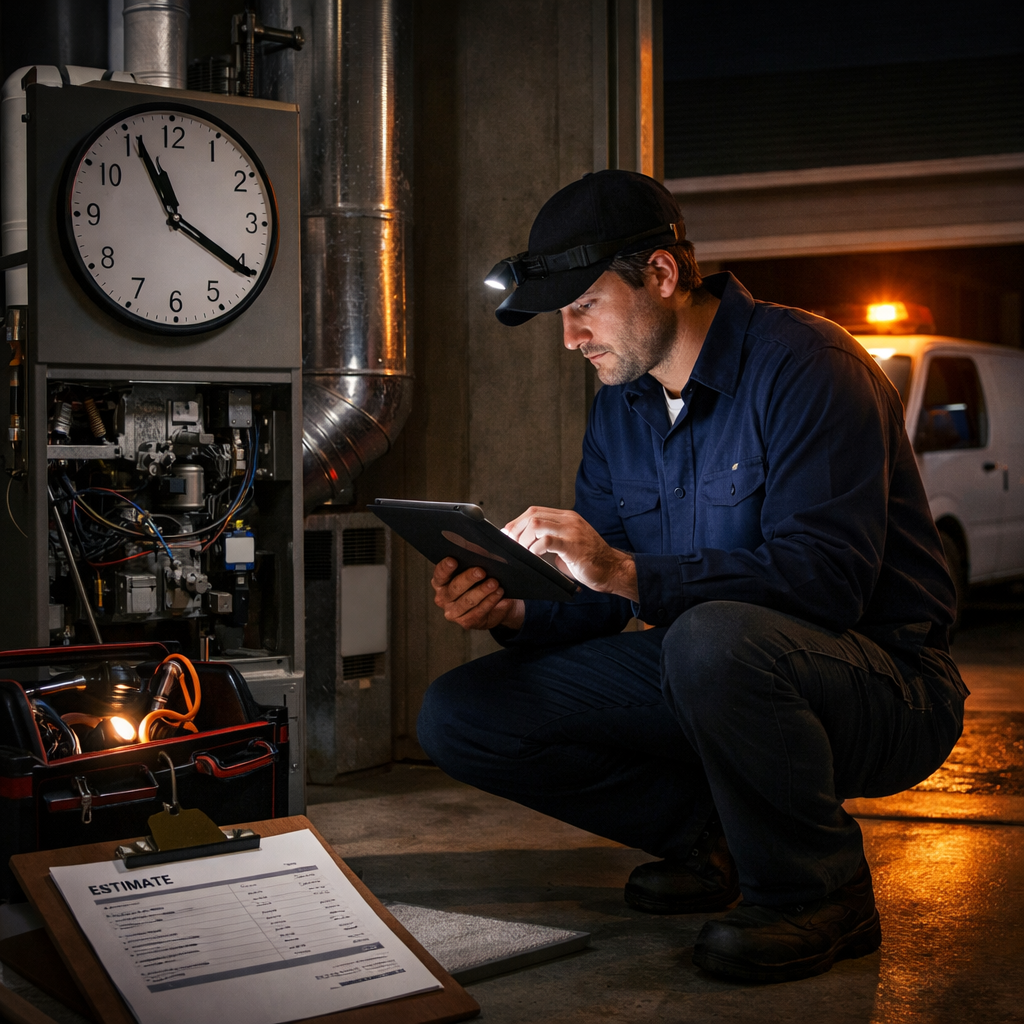
When the heat cuts out at midnight, you can get late‑night furnace repair in Fairfield, Ohio. Local contractors field 24/7 calls, with same‑day, overnight, and true emergency response depending on weather and call volume. Expect most emergency fixes to land between $300 and $1,200, with faster ETAs when you call early and have model details ready. Below, we explain when to call, typical furnace costs in Fairfield, realistic ETAs, what happens during a visit, and the steps that prevent repeat emergencies. We also outline how AC Repair Advisor helps you verify quality work under pressure.
Can you get late night furnace repair in Fairfield
Yes. Fairfield homeowners can reach 24/7 dispatchers for emergency heating repair; many providers offer same‑day, overnight, and after‑hours furnace service, though availability flexes with demand and weather, and costs reflect after‑hours labor. Local data also note around 17 inches of annual snowfall and mid‑20s°F winter lows—conditions that make a no‑heat event urgent due to freeze risk and unsafe indoor temperatures (Fairfield emergency furnace repair cost and availability). If you need to compare options quickly, AC Repair Advisor’s guides help you vet safety practices, availability, and warranty terms. Some nearby teams keep phones open and service vans stocked to enable one‑visit fixes when parts are on the truck, as advertised by Jewel Heating and Air’s Fairfield HVAC services and Thomas & Galbraith’s Fairfield location.
When to call 24/7 emergency service
Call immediately for no heat, a system that won’t turn on, loud mechanical noises, persistent short cycling, a gas smell, visible flames/sparks, or when indoor temps drop toward freezing. When outdoor temps slip into the mid‑20s°F, frozen pipes and unsafe indoor conditions become likely—don’t wait.
Emergency HVAC service is rapid, round‑the‑clock dispatch for unsafe, no‑heat, or system‑down events. It prioritizes immediate stabilization, safety checks for gas, carbon monoxide, and electrical faults, and either a permanent repair or a safe temporary restore, depending on parts availability and site conditions.
Typical emergency costs in Fairfield
Here’s what most homeowners see for furnace costs in Fairfield. Totals vary with diagnosis complexity, access, brand/parts availability, and after‑hours surcharges.
- Typical emergency furnace repair: $300–$1,200 total
- Minor parts (often one‑visit): usually under $500 total
- Major components: can exceed $1,000 total
- Full replacement (contextual average): about $5,335
- Local labor: roughly $73–$155/hour; many waive diagnostic fees if you approve the repair
AC Repair Advisor recommends requesting a line‑item estimate that separates labor, parts, any after‑hours premium, and whether the diagnostic fee is waived.
Parts and labor ranges to expect
- Minor repairs: ignitors, thermostats, and flame sensors often come in under $500 total.
- Major repairs: blower motor repair or a failed heat exchanger can exceed $1,000 total.
- Whole replacement: around $5,335 on average (national guidepost for context).
- Note: Labor is a significant share of the total and tracks with troubleshooting time and access.
After hours surcharges and fee structures
Nights/weekends/holidays typically add an after‑hours labor surcharge. Minimize surprises by confirming the fee structure with dispatch:
- Base hourly labor: $73–$155/hour
- After‑hours surcharge: flat amount or percentage (ask how it’s applied)
- Parts pricing: brand and model listed
- Diagnostic fee: waived or billable if you proceed
When repair vs replacement makes financial sense
Use the 50% rule: if a repair approaches 50% of the cost of replacement—or if a heat exchanger fails—replacement often wins on safety and total cost of ownership. Compare 3–5 written quotes with exact model numbers and warranty terms, and factor age, efficiency, and coverage.
AFUE definition: AFUE is the percentage of fuel a furnace converts into usable heat across a heating season. Higher AFUE reduces fuel waste and operating costs; upgrading older, low‑AFUE equipment can lower total ownership costs over 10–15 years.
Expected ETA and service availability
Many Fairfield contractors advertise same‑day, overnight, and 24/7 emergency HVAC response. Actual furnace ETA depends on weather and call volume; demand spikes during severe cold can stretch waits as teams triage to restore safe indoor temperatures first. Calling early in an outage improves your place in the queue.
What affects response time in severe weather
- Temperature extremes and snowfall that drive high call volume in Fairfield
- Technician availability and proximity; vans stocked with common parts can shorten on‑site time
- Road conditions and safety protocols that shape routing and timing
Condition → Typical impact on ETA
- Mild weather, normal volume → Same‑day or within hours
- First cold snap/snow → Delays of several hours common
- Severe cold wave, icy roads → Overnight or next‑day windows likely
- Citywide surge + limited parts → Temporary heat and scheduled return
How to improve your place in the queue
- Call a 24/7 local provider as soon as heat is lost.
- Provide make/model, thermostat or furnace error codes, and recent service history.
- Clearly note infants, elders, medical needs, or frozen‑pipe risks.
- Confirm after‑hours fees up front and ask if common parts for your brand are stocked on the truck.
- If safe, switch the system off to prevent further damage; report any gas smells or loud noises so dispatch can prioritize appropriately.
What happens during an emergency furnace visit
Expect phone triage, an arrival window, on‑site safety checks, diagnostics, and an attempt to complete on‑truck repairs when parts are available. Larger fixes or replacements come with written estimates and timelines. Ask for an itemized invoice and warranty terms before authorizing work; AC Repair Advisor considers this standard due diligence.
Safety checks and diagnostics
- Initial safety: tests for gas leaks, carbon monoxide, and electrical hazards before operating the unit.
- Diagnostic focus: ignition failure/pilot, flame sensor, thermostat, blower/motor and capacitor, filters, pressure/limit switches, and venting/condensate.
Carbon monoxide (CO) is a colorless, odorless, tasteless gas created by incomplete combustion in furnaces, water heaters, and vehicles. Even low exposure can cause headaches and dizziness; high levels can be fatal. Technicians use calibrated CO detectors to verify safe operation before and after repairs.
Common on truck fixes and timelines for parts
Many techs stock common parts for major furnace brands—ignitors, thermostats, flame sensors—enabling same‑night repairs. Complex components such as blower motors or heat exchangers may require ordering and a return visit; your tech should outline safe temporary heat options, parts lead times, and next steps. Local providers explicitly advertise same‑day emergency help and stocked vans.
Transparent estimates, warranties, and next steps
Ask for a written, line‑item estimate with part numbers, labor hours, after‑hours fees, and any waived diagnostics. Confirm repair warranties in writing and get the ETA if parts must be ordered, including any interim safety measures. Photograph model/serial labels for your records.
Immediate safety tips while you wait
- If you smell gas or hear loud mechanical noises, shut the furnace off; ventilate and evacuate if needed, then call emergency services and a 24/7 technician.
- Close unused rooms, use extra blankets, and protect vulnerable pipe runs from freezing.
- Do not use ovens or grills for heat; if using space heaters, choose UL‑listed models, follow instructions, and never leave them unattended.
How to prevent repeat emergencies
Schedule annual preseason inspections and keep filters on a routine. Maintain a simple service log (filter dates, notes, static pressure readings, and CO test results) to spot trends and support warranty claims.
Preseason maintenance and filter routines
- Book preventive inspections before the cold season to reduce surprise failures.
- Filter routine: check monthly; replace every 60–90 days (adjust for MERV, pets, allergies, or construction).
- Maintenance checklist:
- Thermostat calibration and wiring check
- Flame sensor cleaning; ignition system test
- Blower motor/capacitor inspection; belt/tension (if applicable)
- Condensate/venting inspection; pressure and limit switch tests
- CO test and temperature rise verification
Documented commissioning and airflow checks
Commissioning is a documented process that proves a new or repaired HVAC system performs to manufacturer specifications. Technicians measure airflow, total external static pressure, gas pressure, temperature rise, and safety controls, then record results. These benchmarks enable future diagnostics, protect warranties, and verify code‑compliant, efficient operation.
Static pressure is the resistance the air‑moving system must overcome to push air through filters, coils, and ducts. Measured in inches of water column, excessive static indicates restrictions or undersized ductwork. Keeping readings within manufacturer targets improves comfort, efficiency, and reduces blower stress and premature failures.
Ask for static pressure and airflow readings, confirm temperature rise is within the manufacturer’s spec, and document any duct restrictions. Tie findings to ACCA Manual D targets for better reliability and comfort.
How AC Repair Advisor helps you verify quality
AC Repair Advisor is a neutral, standards‑based verifier. Our tools help you compare 3–5 like‑for‑like quotes and insist on measurable proofs—Manual J/D, static pressure, commissioning reports, model numbers, permits, and clear warranties—so you reduce total cost of ownership over 10–15 years. See the AC Repair Advisor guide to getting best‑value HVAC quotes and the AC Repair Advisor guide to choosing a trusted HVAC contractor.
Request 3 to 5 written in home quotes
AC Repair Advisor recommends getting 3–5 written in‑home quotes with line‑item labor, parts, after‑hours fees, and any waivers. Ensure exact model numbers and warranty terms are listed. Validate license/insurance via state databases or BBB, ask for references, and request recent commissioning examples.
Require Manual J and Manual D documentation
Manual J and Manual D are ACCA standards used to size equipment and design ducts accurately. Manual J calculates a home’s heating and cooling loads from climate, insulation, and occupancy. Manual D translates those loads into duct sizes and layouts that deliver required airflow room by room.
Request the full Manual J report and a Manual D summary with static pressure targets for any replacement or major duct repair to prevent short‑cycling, airflow issues, and repeat failures.
Verify model numbers, efficiencies, and permits
Confirm model and serial numbers, AFUE/HSPF/SEER2 ratings, and that permits and disposal will be handled per code. Capture photos of equipment labels—useful for rebates and future service accuracy.
Insist on commissioning reports and warranty terms
Require a commissioning report showing measured airflow, static pressure, gas pressure, temperature rise, and CO results. Keep copies for future service. Get written parts and labor warranties, emergency response commitments, and required maintenance to keep coverage valid.
Frequently asked questions
How much does emergency furnace repair cost in Fairfield
Most emergency furnace repairs in Fairfield fall between $300 and $1,200, with minor parts often under $500 and major components like blower motors or heat exchangers exceeding $1,000. AC Repair Advisor recommends requesting a line‑item estimate so you can see labor, parts, and any after‑hours premium.
How fast can a technician arrive after hours
Many Fairfield providers offer same‑day or overnight response, but ETA varies with weather and call volume. AC Repair Advisor suggests calling early with your model information ready.
What should I do if I smell gas or suspect carbon monoxide
Turn off the furnace, ventilate, and evacuate if needed. Do not relight or operate the system; call emergency services and a 24/7 HVAC technician immediately—AC Repair Advisor treats this as an emergency.
Will a technician have the part to fix my furnace the same night
Many techs stock common parts like ignitors, thermostats, and flame sensors on their vans, enabling one‑visit fixes. Complex parts may require ordering, with temporary solutions offered when possible; AC Repair Advisor recommends sending a photo of your model/serial label when you call.
Should I repair an older furnace or plan for replacement
If repair costs approach 50% of replacement or involve critical items like a heat exchanger, consider replacement. Use AC Repair Advisor to compare 3–5 written quotes, model numbers, efficiencies, and warranties to decide.